Holbrook Sake Maker Blends Navajo Tea and Japanese Tradition in 200-Gallon Vats
Atsuo Sakurai produces award-winning fermented rice beverages in Arizona, citing a three-month production cycle and a desire to preserve manual craftsmanship.
By Lucia Orlov ·
Atsuo Sakurai operates Arizona Sake, a beverage production shop located just off Route 66 in Holbrook, Arizona. The company creates sake, a traditional Japanese alcoholic drink made from fermented rice, using a 200-gallon vat. Sakurai, who previously worked in the sake industry in Tokyo, established the business to fulfill a long-held dream of manufacturing the beverage outside of Japan.
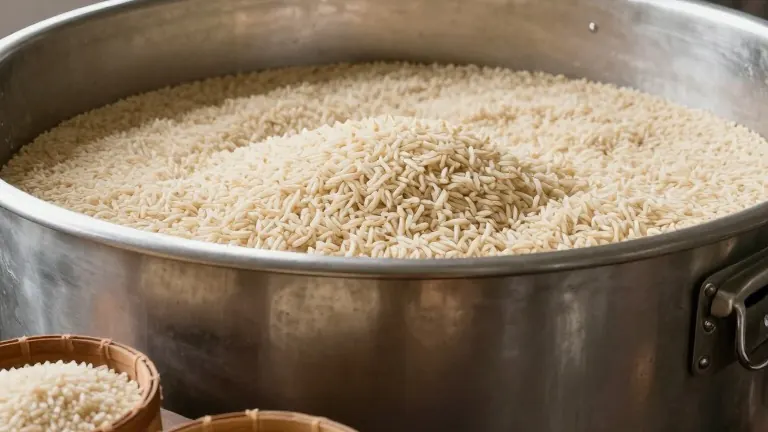
The production process is manual and time-intensive. Workers wash and heat rice in baskets before transferring the grains into vats for fermentation. Once fermentation is complete, the mixture is pressed under pressure to extract the liquid, a method Sakurai compares to pressing mash. He stated that it takes approximately three months to complete the journey from raw rice to finished bottle.
Sakurai’s wife, Heather, is from the Navajo Nation, and the couple integrates elements of both cultures into their product line. One specific variety of sake incorporates Navajo tea, a plant native to the region. Sakurai described the ingredient as a direct link to local flora, noting that the tea is a key component in that specific blend.
The shop produces traditional styles of sake that have earned recognition in competitions in Japan and internationally. While some varieties are available for purchase in Holbrook, others are exclusive to the local market. Sakurai noted that customers often express surprise upon learning the product is made in Arizona rather than Japan. He recalled that early skepticism was common, with many people initially disbelieving the origin of the beverage.
Tasters have identified distinct flavor profiles in the final product. One individual reported detecting the taste of prickly pear in a specific batch, describing the flavor as distinctly Arizona. Sakurai added that other patrons frequently describe the aroma as resembling pear or blueberry. These sensory notes help differentiate the local product from standard Japanese exports.
Sakurai views the slow, hands-on nature of the work as a counterpoint to modern automation. He expressed a desire to preserve this type of business model against the backdrop of increasing technological integration. When asked about the long-term sustainability of the shop, specifically if it would still be operating in 100 years, Sakurai answered that he hopes so.
Source: KPTV
More Business · Scam Watch · Report a business · Got a Story?