Music Industry Fraud: Recent Scandals and Identity Questions
NPR Music staff outline a history of fabrication, from the 2001 Silibil N' Brains hoax to the 2007 Joyce Hatto recording swap and Rick Ross's prison guard past.
By Alexander Novak ·
The 2026 music landscape is defined by questions of authenticity, driven by generative AI and rapid chart climbs that fuel skepticism about promotional tactics. NPR Music staff recently detailed a catalog of 21st-century frauds to contextualize this current unease. They argue that the desire for purity has accelerated over the last few decades alongside new technologies and discovery routes.
One of the most elaborate early examples involved Gavin Bain and Billy Boyd, a Scottish duo who convinced the industry they were American. After being rejected by Polydor Records in London in 2001 for rapping in Scottish brogues, the pair reinvented themselves as Silibil N' Brains. They adopted American accents and claimed to be from Huntington Beach, California, meeting at a San Francisco rap battle. Sony UK signed them based on this fabricated identity.
The duo maintained the ruse for executives, audiences, and girlfriends, opening for D12 at Brixton Academy at their peak. Bain told NPR in 2010 that the characters became difficult to shed. The lie fractured the partnership in June 2005, leading Boyd back to Scotland. Bain continued the solo act until a dramatic onstage reveal in 2007. A film directed by James McAvoy based on Bain's 2010 memoir was released in the U.S. this year, adding to the ongoing mythology.
In the classical world, pianist Joyce Hatto and her husband William Barrington-Coupe created a scandal through misattribution. After Hatto’s career stalled in the 1970s, she released approximately 100 albums on her own label in the late 1980s. Critics praised her work, with Richard Dyer of The Boston Globe calling her the greatest living pianist almost no one had heard of. She died in 2006 at age 77, leaving a legacy that Jeremy Nicholas of The Guardian described as unmatched in quantity and range.
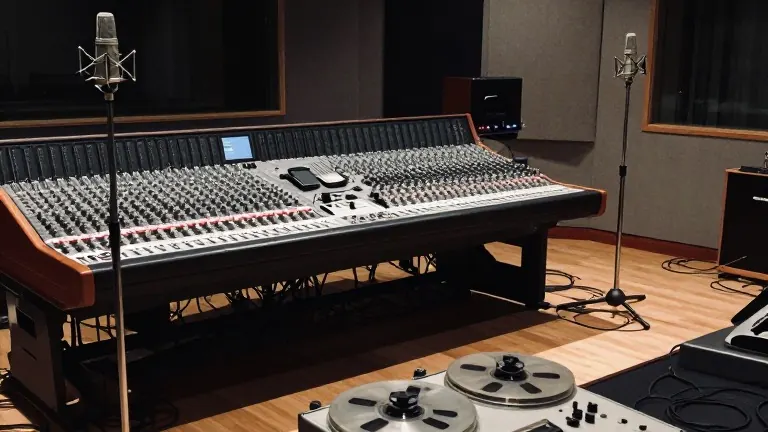
The fraud unraveled less than a year after her death when a listener noticed a Hatto recording of Liszt was identified digitally as László Simon’s performance. Further checks revealed other albums were performed by pianists like Yefim Bronfman and Carlo Grante. Audio experts confirmed the soundwaves matched other artists’ recordings. In February 2007, Barrington-Coupe admitted he had swapped in other pianists’ performances, sometimes altering speeds to hide the differences, claiming he did it for his ailing wife.
Hip-hop saw a credibility challenge in 2008 when a photo of Rick Ross in a Miami-Dade County correctional officer’s uniform surfaced. The image contradicted his backstory as a luxury rap kingpin just as his album Trilla debuted at No. 1 on the Billboard 200. Ross initially blamed online hackers but later released Deeper Than Rap, his third No. 1 album. The Smoking Gun confirmed he worked as a prison guard for 18 months. He solidified his status through songcraft despite the discrepancy between his stage persona and his history.
Lana del Rey’s 2012 debut Born to Die also sparked debates over authenticity. Her retro aesthetic and the lo-fi YouTube release of Video Games created immediate questions about her DIY origins. Critics argued her look eclipsed coverage of her music. These historical cases illustrate how the music industry has always struggled with the gap between perceived reality and constructed image.
Staff at NPR Music noted that while new technologies make fraud easier, the underlying anxiety about authenticity is not new. Each scandal, from the Silibil N' Brains hoax to the Hatto recordings, forces a reevaluation of how fans and critics value truth in artistic performance. The specific details of these past deceptions provide a framework for understanding current discussions about AI and promotional strategies in 2026.
Source: KPBS