Twisted Teens Frontman Sings 'Is It Real' as Music Scams, AI Flood 2026
A wave of new bands is releasing raw, confrontational sounds as fans and critics question the authenticity of artists, recordings and live events.
By Alexander Novak ·
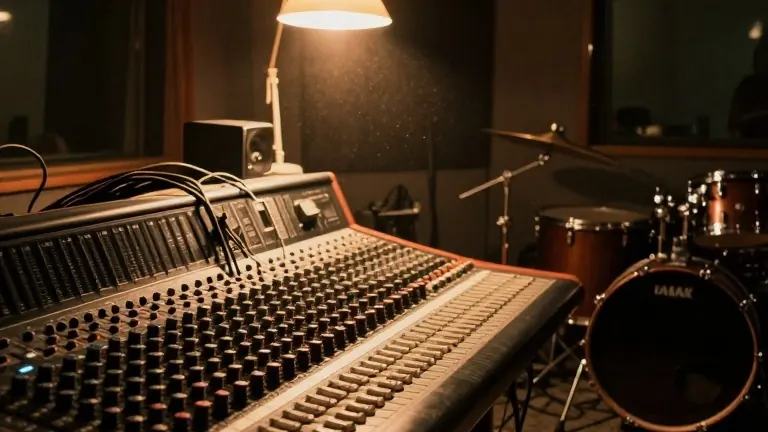
New Orleans rock band Twisted Teens released a song this year titled "Is it real?", frontman Caspian Hollywell shouting the question over a disheveled, joyous performance. Hollywell has used several stage names, including CPN, C-Bird and Cas P. Ian, and has also spelled his last name Holywell and Halliwell. "You can like us or you can hate us, but you can't say we're not real," Hollywell told an interviewer.
Reports of faked musical identities, counterfeit vinyl, rigged viral successes and plagiarism have surfaced repeatedly this year, alongside AI-generated performers and so-called industry plants. The Rolling Stones used de-aging effects in a video. Fans say they cannot trust what they hear, see or buy, and the atmosphere feels chaotic.
Bands are responding with raw, confrontational recordings. Twisted Teens and Westside Cowboy play punky garage rock; Mandy, Indiana plays noise rock; underscores makes self-dismantling hyperpop; GENA plays jazz-funk. These artists are drawing the year's strongest acclaim as they push back against AI-generated material.
Concerns about authenticity in music date back decades. Ry Cooder recorded his 1979 album "Bop Till You Drop" digitally, the first major-label artist to use a computerized system. Cooder found the master tape accurate but said the disc transfer came out "thin" and "cold."
In the early 1990s, session singer Yvette Marine accused Paula Abdul and her producers of blending Marine's guide vocal with Abdul's to create a composite voice on "Opposites Attract." Marine sued and lost. Critic Simon Reynolds wrote in The New York Times that the song was "louder than life but lacking in resonance."
Earlier debates followed the same pattern. In 1929, Volney D. Hurd told Christian Science Monitor readers to accept radio music as a "true miniature of the event" while seeking out live performances. In 1970, Washington Post critic William C. Woods called the album and film "Woodstock" "a treasure and a fraud," citing audio fidelity and editing.
Hugh Barker and Yuval Taylor described three tests in their 2007 book "Faking It": representational authenticity, which asks whether an artist performed or composed a work bearing their name; cultural authenticity, which requires verifiable ties to communities or legacies; and personal authenticity, which asks whether a confessional song reflects an artist's own experience.
Digital recording, synthesizers and studio tools have repeatedly raised questions about what counts as real. Donna Summer's synthesizer-driven "Love To Love You Baby" and The Monkees not always playing their own instruments in the studio are now accepted. ABBA Voyage, a hologram show in London, has drawn crowds since 2022.
Source: KPBS