Bluetooth SIG approves 7.5 Mbps speed boost for Core 7.0 standard
The new High Data Throughput feature quadruples current limits, targeting better audio and faster firmware updates for consumer devices.
By Hassan Lawson ·
Wireless connectivity standards are evolving to handle heavier data loads. The Bluetooth Special Interest Group formally adopted Bluetooth High Data Throughput as an optional feature of the Bluetooth Core 7.0 specification on November 4, 2026.
The new protocol raises the maximum supported bit rate for Bluetooth Low Energy from 2 Mbps to 7.5 Mbps. This nearly fourfold increase allows for higher resolution audio streaming without requiring proprietary wireless formats. The upgrade also aims to improve battery life and signal reliability for connected devices.
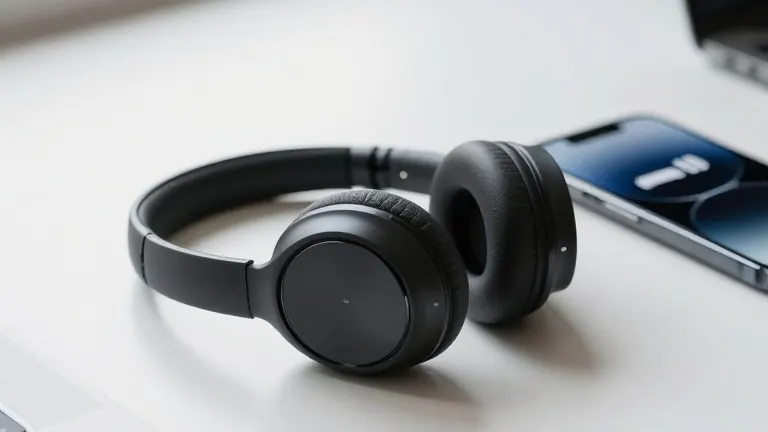
Audio remains the primary application for the new technology. Manufacturers expect the first headphones and speakers supporting High Data Throughput to reach the market in 2027. These devices will support high-resolution audio, spatial audio, and multi-channel surround sound using the standard Bluetooth protocol.
Benefits extend beyond sound. Smartwatches can sync health, fitness, and training data to paired phones in shorter bursts. Because the radio remains active for less time, battery drain decreases during data transfers. Spatial computing and extended reality hardware can also operate with more capability without relying on Wi-Fi connections.
Personal AI devices will use the faster speeds to offload data to smartphones more efficiently. This allows manufacturers to build lighter and smaller hardware. Routine maintenance tasks, such as updating firmware on smart home accessories, will also complete faster. Users may no longer need to schedule updates for periods when the device is idle.
Neville Meijers, CEO of the Bluetooth Special Interest Group, described the adoption as a performance leap for the industry. He stated that the update expands the role Bluetooth plays in consumer, commercial, and industrial markets. Meijers noted that the technology creates a foundation for future wireless innovation while meeting the demands of a connected world.
Source: The Verge