Moscow Airports Halt Operations for Up to Nine Hours Amid Drone Strikes
Ukrainian drone attacks have triggered daily airspace closures in October, raising safety concerns and insurance costs for foreign carriers.
By Lucia Orlov ·
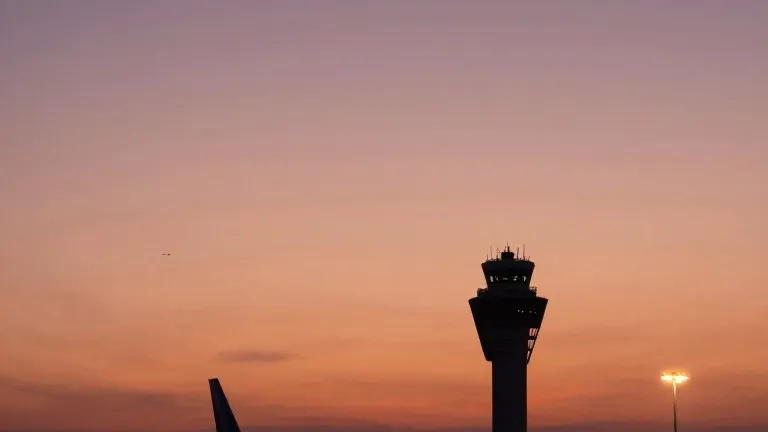
Four major airports in the Moscow region have suspended operations almost every day this month due to Ukrainian drone activity.
According to the investigative outlet Agentstvo, Domodedovo, Sheremetyevo, Zhukovsky, and Vnukovo airports faced closures of up to nine hours in October. This pattern follows a strategic shift announced by President Volodymyr Zelenskyy in early September, who stated that Ukraine aims to make Russian airspace completely unsafe. Ukraine also issued a formal warning to the International Civil Aviation Organization the day after his remarks.
The immediate cause of these disruptions is a safety protocol managed by Rosaviatsiya, Russia's aviation authority. Known as the carpet protocol, this procedure mandates the closure of airspace over a region if aircraft violate borders, weapons are deployed, or unidentified objects appear. Oleksandr Laneckij, chief executive of Friendly Avia Support, noted that every drone now poses a military threat. He compared the situation to the disruptions caused by Yemen's Houthis in Saudi airspace, arguing that Ukraine's military capabilities significantly exceed those of the Houthis.
Military analyst Jan Matvejev stated that Ukraine can severely disrupt Moscow air traffic without fully closing the sky. He explained that simple, non-warhead drones are sufficient to trigger the protocol. Ukraine's industrial capacity allows for the production of hundreds of combat-ready long-range drones daily. Simon Shuster wrote in The Atlantic in October that these efforts are just getting started. Matvejev argued that Russian air defenses are not fully effective, suggesting that if Russia could easily shoot down these drones, it would have done so by now.
Experts warn that the current safety measures create risks for civilian flights. Laneckij said Russia might lower the threshold for activating the carpet protocol, increasing the danger of incidents similar to the December 2024 crash of an Azerbaijan Airlines flight. That aircraft was struck by a Russian air-defense missile while counteracting drones, killing 38 people. Matvejev noted that while machine guns pose low risks to aircraft, missiles carry higher risks due to potential production defects. He added that drones weighing dozens of kilograms do not need explosives to cause serious harm through collision.
The impact of the drone campaign extends beyond Moscow. Ukrainian forces attacked Pskov airport in the summer of 2023, and drone debris fell on Sochi airport earlier this month. In September, Zelenskyy confirmed that Kyiv's airport and Boryspil were struck by Russian forces. The uncertainty is affecting commercial aviation economics. Laneckij said foreign airlines will decide whether to continue flying to Russia based on military threats, passenger demand, and insurance costs. High risk ratings could lead to sharply raised premiums and higher ticket prices.
Competition in Russia's aviation market has already shrunk as many airlines have gone out of business. This reduction in supply has increased demand for seats on the remaining foreign carriers. Laneckij concluded that the decision to stay or leave depends on the price airlines must pay for the danger faced.
Source: Deutsche Welle