One Woman in Tijuana Keeps Two Separate Altars Alive for the Dead
In the Colonia Obrera neighborhood, Doña Chole maintains distinct ofrendas for children and adults, a practice that persists as Halloween grows in local prominence.
By Lucia Orlov ·
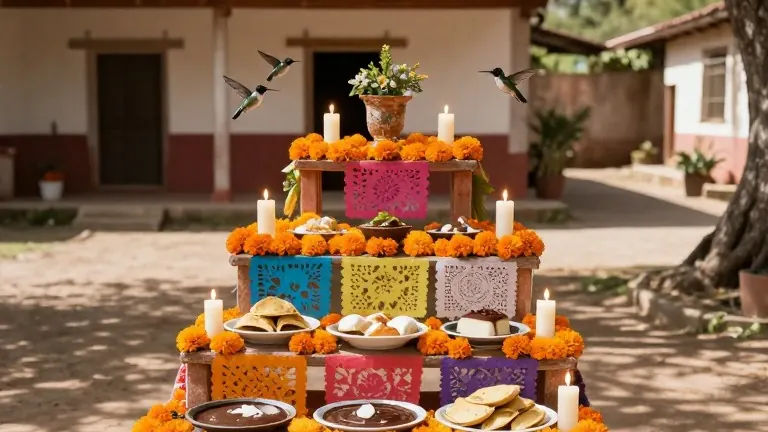
In the late 1980s, finding a Day of the Dead altar in Tijuana was rare. Halloween dominated store displays and school events, while in other parts of Mexico, family ofrendas were common on street corners. In this border city, residents often had to search specifically to see the tradition.
A reporter sought out a private home where the custom remained active, away from official exhibitions. The search led to the Colonia Obrera, a neighborhood of dirt roads and improvised fences where many Oaxacan families, particularly Mixtec migrants, had settled.
A shopkeeper in the area directed the reporter to Doña Chole, a woman who maintained two separate altars each year. She built one for children visiting on November 1 and another for adults visiting on November 2. The shopkeeper advised the reporter to walk to a large tree, turn left, and look for a small house surrounded by trees.
Upon arrival, the reporter found Doña Chole in the courtyard finishing preparations. She was approximately 75 years old, with a long white braid and a calm demeanor. The adult altar was already complete. It featured bottles of tequila, mezcal, pulque, and aguardiente on an upper level. Below sat plates of mole with chicken, quesadillas, fried tacos, sweets, and pan de muerto.
Photographs on the altar included those of Doña Chole’s grandfather, Don Pablo, her husband, Joaquín, and her son, Pedro. Pedro had died just one year prior. Letters from family members were placed among the photos, noting birthdays and shared memories.
When the reporter asked if the food was a waste, Doña Chole responded that the dead come because they know they are expected. She stated that the deceased enjoy finding items they liked in life. She claimed they arrive with the wind, the rain, or as hummingbirds.
As she spoke, several hummingbirds appeared among the cut paper decorations in the courtyard. Doña Chole greeted them, saying, "Here is the food. We are waiting for you." She spoke of her deceased family members as if they were still part of the household, correcting a flower or straightening a photo while she conversed.
The reporter left with the interview and photographs. Years later, the status of the house and the trees is unknown. It is unclear if anyone still builds those altars in the Colonia Obrera. The scent of roses that preceded the house and the hummingbirds that visited remain the lasting details of that afternoon.
Source: Times of San Diego