Resolve Marine Group Completes Mast Removal From Sheerness Wreck
Engineering crews have detached the deteriorating spars from the SS Richard Montgomery to prevent a potential collapse, while the dangerous cargo remains submerged under constant observation.
By Alexander Novak ·
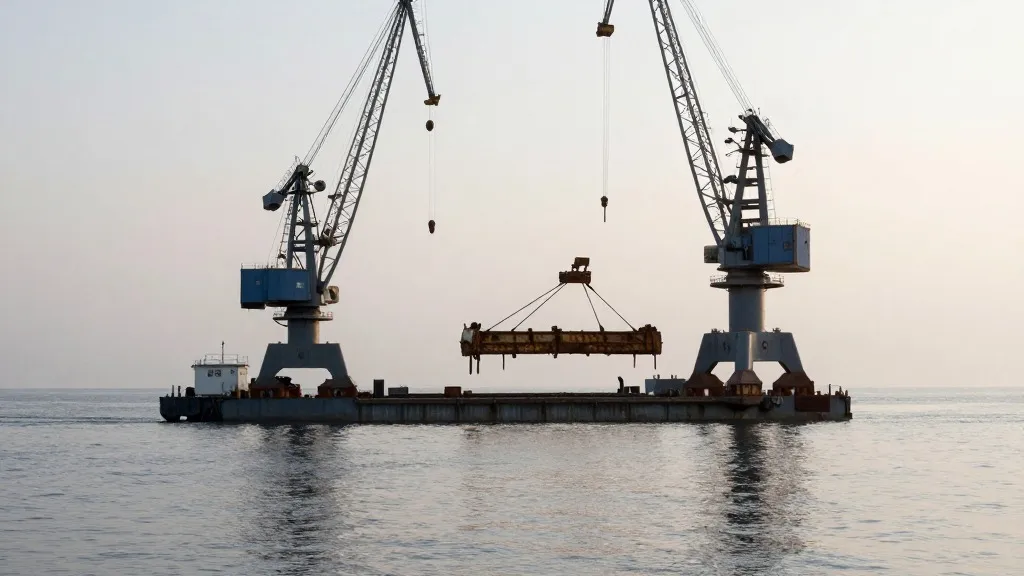
Residents and mariners traveling near the Thames Estuary have lost a long-standing visual landmark, though the underlying risks associated with the site have not vanished. The three rusting masts that previously rose from the water above the SS Richard Montgomery have been fully detached. This action concludes a major engineering effort designed to mitigate the chance of a catastrophic failure. However, the estimated 1,500 tons of World War II era explosives housed in the cargo holds remain untouched and submerged.
The vessel, one of roughly 2,700 American ships constructed for the Allied war effort, ran aground on a sandbar off Sheerness in August 1944. Located approximately 40 miles from London, the ship broke apart during salvage operations after failing to reach Europe. Recent structural surveys indicated that the masts were deteriorating and beginning to lean. Engineers feared that a collapse could strike the cargo, triggering a detonation via pressure fuses.
Nolan Conway, a naval architect with Florida-based Resolve Marine Group, explained the danger. He noted that the fear was the masts falling onto the cargo and causing it to detonate. To address this, his team constructed a custom lifting frame to raise each mast without inducing swaying. They also employed a remotely operated underwater diamond-wire saw, which allowed for cutting without requiring divers to enter the water.
U.K. maritime minister Keir Mather informed the House of Commons that the complex project finished ahead of schedule and on budget. The total cost for removing all three masts was just under $13 million. Mather stated that the masts had placed a significant load on the structure, and their removal supports the long-term safe management of the site.
The decision to leave the munitions in place stems from the considerable risks involved in extracting them. Experts remain divided on the potential consequences of a blast. Conway described estimates ranging from shoreline damage and a tidal wave traveling up the Thames to a minor event that might only close a nearby shipping channel. Despite the uncertainty, officials continue to judge the overall probability of an explosion as low.
The wreck sits about 1.5 miles off the Sheerness coast, within a government-mandated exclusion zone. Mather confirmed that the site will continue to undergo continuous monitoring and control. The removed masts are not being discarded. They have been transported to the Historic Dockyard Chatham museum for display, recognizing the ship's historic significance in supporting Allied forces during the war.
Source: CBS News