Sudan Family Pays Full Salary for Water
In Port Sudan, a cafeteria worker spends 10,000 pounds daily on water, a cost that consumes her entire monthly income.
By Lucia Orlov ·
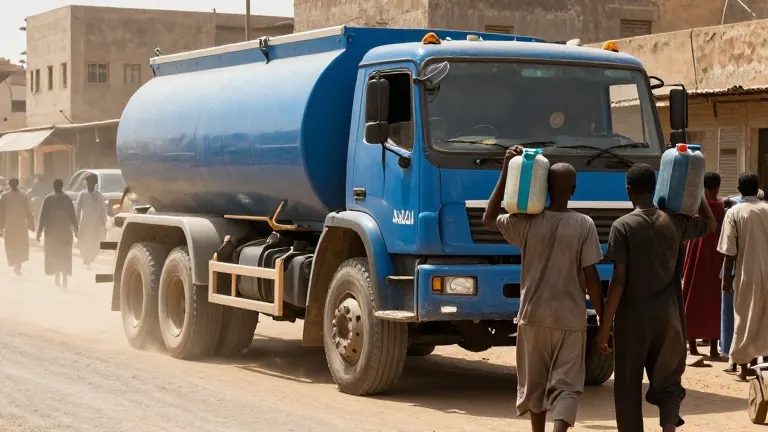
Amina Khalafallah spends 10,000 Sudanese pounds on water every day. At the current parallel market rate, this equals one US dollar. For a month, the total is 300,000 pounds, or roughly 30 dollars. This amount matches her entire monthly salary.
Khalafallah lives in the Deim Mayo neighborhood in eastern Sudan. Her home lacks a connection to the piped water network. She relies on street vendors who sell 18 liters of water for 1,000 pounds. She works in a cafeteria at a private institution. Her husband works in another state and sends money when he can. The family often borrows funds to cover basic needs.
The UNDP reports that the war in Sudan has pushed average incomes back to levels last seen in the early 1990s. Water prices rise during hotter months. Vendors become harder to find. Khalafallah said she sets aside money for water in the summer before paying for other essentials. Sometimes she goes without other necessities to do so.
The African Development Bank identifies access to safe water as one of Sudan’s most urgent needs. Millions of children face risks from waterborne diseases. Port Sudan has avoided much of the fighting seen elsewhere. However, displaced people have arrived in the city. This influx strains fragile infrastructure. The AfDB states the city’s water supply meets less than 40 percent of demand.
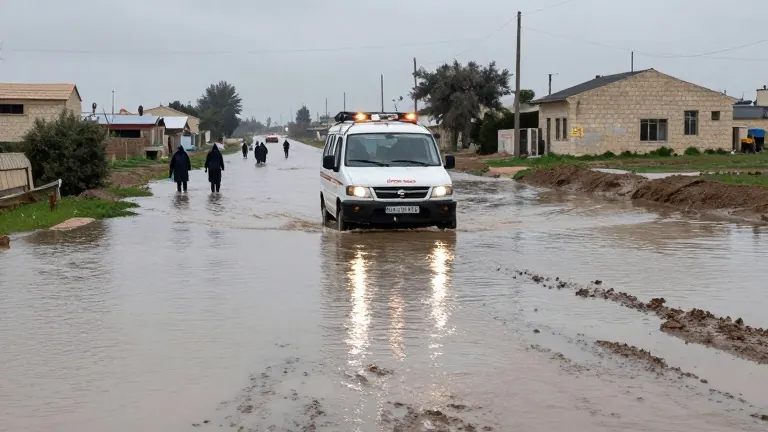
A major cause of the shortage is the collapse of the Arbaat Dam. Located in the Red Sea Hills northwest of Port Sudan, the dam once supplied half the city’s daily water needs. Heavy rain and flooding caused the dam to fail in August 2024. The collapse destroyed villages downstream and damaged pipelines and wells. Entire neighborhoods now depend on trucked water deliveries.
Ahmed Osman, 30, works at a water distribution station. He has worked there for three years. He sells water to street vendors. When the war began in April 2023, he charged vendors 4,000 pounds to fill a donkey-drawn cart with at least 250 liters. Prices have risen since then. Operating costs, particularly fuel, have increased.
Osman said a water tanker carrying 50,000 liters now costs 1.5 million pounds. That is 150 dollars. Before the war, the cost was about 450,000 pounds. Osman stores water in tanks before pumping it into vendor carts. He charges 16,000 pounds, or 1.60 dollars, to fill a cart with 250 liters. After expenses, he makes a profit of about 70,000 pounds, or 7 dollars, per day. He splits this with his partner.
Rehabilitation work has restored parts of the water network. The UNDP reports that crews have drilled or rehabilitated 15 boreholes. They have laid 17 kilometers of new pipelines. They have also installed solar-powered pumps. The UNDP says this restored system can supply water to nearly 230,000 people.
That capacity does not cover the entire population. The UNDP estimates Port Sudan now has one million residents. Other projects are necessary to meet resident needs. The AfDB and UNICEF launched a project in June. It intends to expand access to safe water for up to 750,000 people in the city.
Emad Hafez, medical director of the emergency department at Port Sudan Teaching Hospital, said water shortages pose serious health risks. Disruptions force families to use untreated water. This increases the risk of cholera and other diarrheal diseases. The risk is highest during the rainy season and in overcrowded displacement camps. Storing water in uncovered containers creates breeding sites for mosquitoes. This raises the risk of malaria and dengue fever. Hospitals also need reliable water for infection prevention and cleaning. Hafez said water insecurity can worsen food shortages and malnutrition. Children under five and pregnant women are particularly vulnerable.
Source: Al Jazeera