Tehran Households Slash Meat and Leisure Spending as Inflation Hits Record Levels
With prices for basic staples rising sharply, residents are prioritizing survival over savings and social activities.
By Alexander Novak ·
The gap between earning a living and actually living a life has never been wider in the Iranian capital.
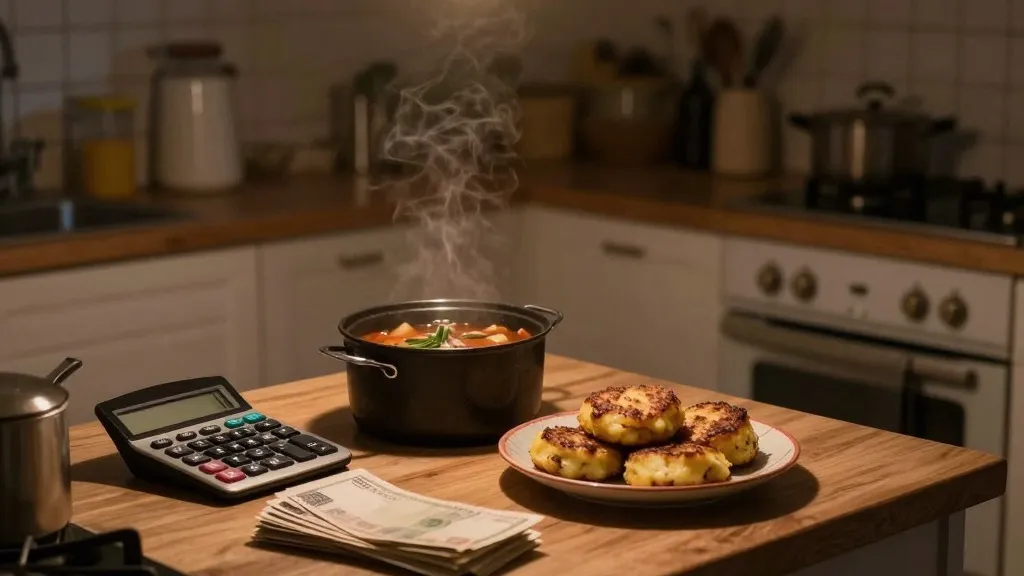
Recent data from a field survey in central Tehran reveals a drastic shift in household behavior. Families are no longer just stretching their budgets; they are abandoning long-held habits. The cost of a standard chicken and barberry dish has nearly doubled in twelve months. A traditional serving of ghormeh sabzi, often cited as the national dish, now commands 23 million rials, or about $8.45. Even simple potato patties, known locally as kookoo sib zamini, cost roughly 4 million rials. These figures illustrate how the price of basic sustenance has outpaced the ability of the average worker to pay.
The financial strain is visible in the daily choices of those who remain. A newly married woman in the city, who spoke on condition of anonymity, explained that the funds her family had saved for a wedding celebration were instead required for a housing deposit. She now works double shifts to service a loan, leaving little time for anything else. Her home, she noted, has become merely a place to sleep. Each morning, she and her husband wake up knowing they are poorer than the day before.
Other households are making similar sacrifices to keep food on the table. One mother said her family now reserves most meat and chicken for their growing children. She and her husband have switched to legumes and meat substitutes. They worry that further price hikes will soon force them to cut protein from their children’s meals as well. The pressure is not limited to lower-income groups. A middle-aged man in western Tehran, whose combined salary and rental income reaches one billion rials ($367), said he has no savings left for the future. His household income is well above the Tehran average of 600 million rials, yet he has given up travel and dining out entirely. He described his situation as being able to survive today with no security for tomorrow.
The economic backdrop for these struggles is severe. Years of international sanctions and the steady decline of the rial have weakened the economy before the recent conflict. The war that began on February 28 between the United States, Israel, and Iran damaged infrastructure and disrupted trade. A US naval blockade has reduced oil exports and imports, while Iranian attacks in the Strait of Hormuz have hindered shipping. In August, the US Treasury launched a new sanctions campaign dubbed Economic D-Day, aiming to isolate Tehran financially. Annual inflation hit 89.9 percent in September, while the average monthly wage is estimated at just $100.
Official responses have been mixed in their acknowledgment of the pain. Central bank Governor Abdolnaser Hemmati admitted on October 23 that the people are bearing a heavy burden. However, he argued that efforts to isolate the economy have failed to meet their primary goals. Independent estimates from the fact-checking outlet Factnameh suggest the burden is growing. A basket of 11 essential food items cost 56 million rials ($20.70) per person in September. For a family of three, that total exceeds 168 million rials ($61.70). The government’s food voucher, worth 10 million rials, now covers less than 18 percent of that per-person cost, a sharp drop from the 30 percent it covered in December 2025.
The impact extends to retirees and younger workers alike. A retired woman living on a monthly pension of 180 million rials ($66) has cut back on meat and other proteins since the new year began in March. She worries about her health but considers herself lucky because she does not pay rent. A 28-year-old woman earning 400 million rials ($147) a month has changed how she socializes. She and her friends used to visit cafes every week. Now, they often order a single dish to split between two people. Sharing, she said, is the only way to make going out affordable.
For many in Tehran, the decision to eat less, save less, and travel less is no longer a choice but a necessity. The numbers show a clear trend: as the cost of basic food items climbs, discretionary spending vanishes. The result is a society where even the middle class is struggling to maintain a buffer against the next price hike.
Source: RFE/RL