84% of high school students use AI for schoolwork, College Board finds
A new report shows a sharp rise in artificial intelligence adoption among teenagers, prompting educators to rethink how schools engage students in difficult learning tasks.
By Alexander Novak ·
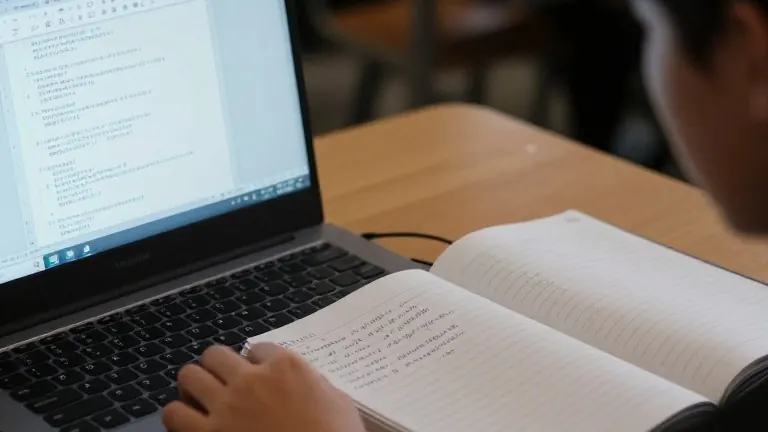
The College Board reported in its most recent survey that 84% of high school students used artificial intelligence for schoolwork between January and May 2025. This figure represents a jump from 79% reported just four months earlier. Approximately half of these students used the technology to brainstorm ideas, revise essays, or research topics.
Educators argue that AI did not create a lack of student motivation but exposed a long-standing issue in schools. Chris Hulleman, a University of Virginia researcher who has studied student motivation for over 20 years, noted that many students view school as optional since the 2020 pandemic. He observed that students question the purpose of assignments that seem boring or irrelevant. When they perceive the work as inefficient, they turn to free AI tools to complete the task with minimal effort.
A separate report from the University of Southern California found that most college students rely on AI for quick answers rather than deep understanding. Researchers labeled this "executive help" as opposed to "instrumental help" which deepens knowledge. Students tend to take the path of least resistance unless instructors actively guide them toward more rigorous engagement with the material.
Alex Campbell, a sociology teacher at Elizabethton High School in Tennessee, cited his experience leading students to solve a cold-case murder series as an example of effective engagement. His students developed a theory supported by the Tennessee Bureau of Investigation, a project that later became a podcast and an Amazon Prime series. Campbell emphasized that difficult work becomes manageable when students are invested in the outcome. He stated that meaningful experiences are almost always hard.
Rebecca Winthrop, a senior fellow at the Brookings Institution, said AI arrived in a school culture that had already become transactional. A 2024 Gallup survey found that fewer than half of middle and high school students felt their coursework challenged them. Only 17% strongly agreed that they had learned something interesting at school in the previous seven days. Winthrop noted that the job market now requires higher-order thinking skills, making basic literacy and numeracy insufficient for many careers.
Darren Lam, an 18-year-old recent graduate from Staten Island Technical High School in New York, described a trend where some classmates use AI to automate their schoolwork entirely. He said that in many cases, the AI effectively acts as the student. Other students use the technology to finish undesirable assignments or gain extra time. Lam acknowledged that while some peers refuse AI on principle, many others use it despite concerns about academic integrity.
Darren Kane, a Colorado math teacher, compared AI to indoor plumbing. Just as plumbing freed people from hauling water but reduced their daily exercise, AI may be reducing cognitive effort. Kane warned that this could contribute to a reversal of the Flynn effect, a historical rise in IQ scores. He suggested that schools should focus on "hard fun" activities, where work is difficult but within reach, to help students experience their own mental capabilities.
Source: Los Angeles Daily News
More News · Campbell news · Report a business · Got a Story?