Critical Flaw: Billions of Devices at Risk as Hackers Can Now Spoof Any Website
A fatal error in certificate issuance allows attackers to impersonate major brands, forcing a massive, urgent update across the global tech ecosystem.
By Daniela Vargas ·
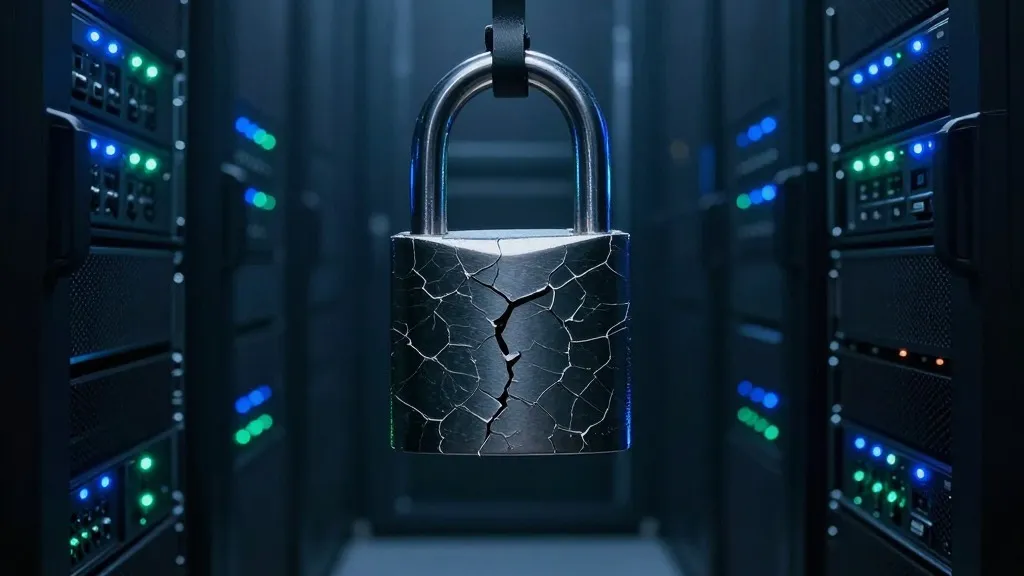
For the average Californian, the digital landscape has suddenly become a high-stakes game of trust. If you are using a device that has not yet received a specific security patch, an attacker positioned anywhere in your network path could intercept your data and disguise themselves as any major website. This means that when you visit a familiar site like a bank or a retail giant, your device may believe it is communicating with the legitimate source, even if it is not. The immediate impact is a heightened risk of data theft and malware injection for millions of users who rely on standard web browsing and software downloads.
The scale of this vulnerability is defined by the sheer number of compromised credentials. Indian certificate authority eMudhra issued eight insecure intermediate certificates: six for TLS (web security) and two for code signing. The critical failure lay in the private keys associated with these certificates. Instead of being long, complex strings of data, these keys were only one byte in length. This reduces the possible values to a range of just 0 to 255, a number that can be brute-forced and cracked in a fraction of a second by any modern computer.
The mechanism of the attack relies on how digital trust is established. Websites and software use a 'chain' of certificates to prove their identity. A site’s certificate is signed by an intermediate Certification Authority, which is in turn signed by a root certificate. Because the private keys for the eight eMudhra certificates were so weak, an attacker could generate a valid certificate for any domain they chose. This allows them to impersonate entities like apple.com or bankofamerica.com, or to sign malware so that it appears to be a legitimate application from a trusted vendor like Microsoft or Google.
The immediate response from the tech industry has been to revoke these certificates and update the trust lists maintained by operating systems and browsers. Users are advised to update their software immediately to ensure that the compromised certificates are no longer trusted. The revocation process involves either removing the affected root certificates or hard-coding a rejection of the eight specific weak keys, ensuring that any connection attempting to use them is automatically blocked.
However, a significant portion of the population may be protected by newer browser features. Recent versions of Chrome, Brave, Firefox, and Safari enforce a security standard called Certificate Transparency. This feature requires that all certificate issuances be logged in a public, read-only registry. According to Google, none of the certificates signed by the affected eMudhra intermediates appeared in these logs. Therefore, users who rely exclusively on these modern browsers for standard web browsing are likely safe, though they should still verify that all other installed software is up to date.
The complexity of the fix lies in the vast array of devices that rely on these certificates. The update must be pushed to personal computers, servers, smartphones, tablets, routers, and virtual machines. It also extends to programming languages like Python, Go, Node.js, and Rust, as well as standalone utilities like curl. Systems administrators are facing a daunting task of ensuring that every node in their network, from physical hardware to Docker containers, has the latest security patches applied.
The most concerning long-term risk involves older technology that may not receive updates. Legacy routers, smart home appliances, and Internet of Things (IoT) devices often run on outdated operating systems with limited capacity for patching. These devices, which are ubiquitous in California’s smart homes and offices, could remain vulnerable indefinitely. If the weak keys are not rejected by these older systems, they could serve as persistent entry points for attackers looking to bypass modern security defenses.
The root cause of the error remains under investigation. It is still unclear how eMudhra managed to issue certificates with such fundamentally flawed keys, which are typically kept offline in secure vaults. The incident highlights the fragility of the digital trust infrastructure that underpins the modern internet. For now, the advice is clear: do not wait. Check your devices for updates, prioritize your operating system and browser, and assume that any software not recently patched may be at risk of impersonation attacks.
This event follows a recent critical vulnerability in PHP, compounding the workload for IT professionals and concerned users alike. The convergence of these issues means that the coming weeks will be critical for maintaining digital security. While the immediate threat is manageable through updates, the long-term implications for older hardware require careful monitoring. Until all systems are patched, the digital web remains a place where identity is only as strong as the weakest link in the certificate chain.
Source: Tom's Hardware