Tesla Shifts Fremont to Mass-Producing Optimus Robots
Tesla is converting former car assembly space into a high-volume robot factory, aiming to deliver production-ready units to outside businesses by the end of next year.
By Chinedu Okafor ·
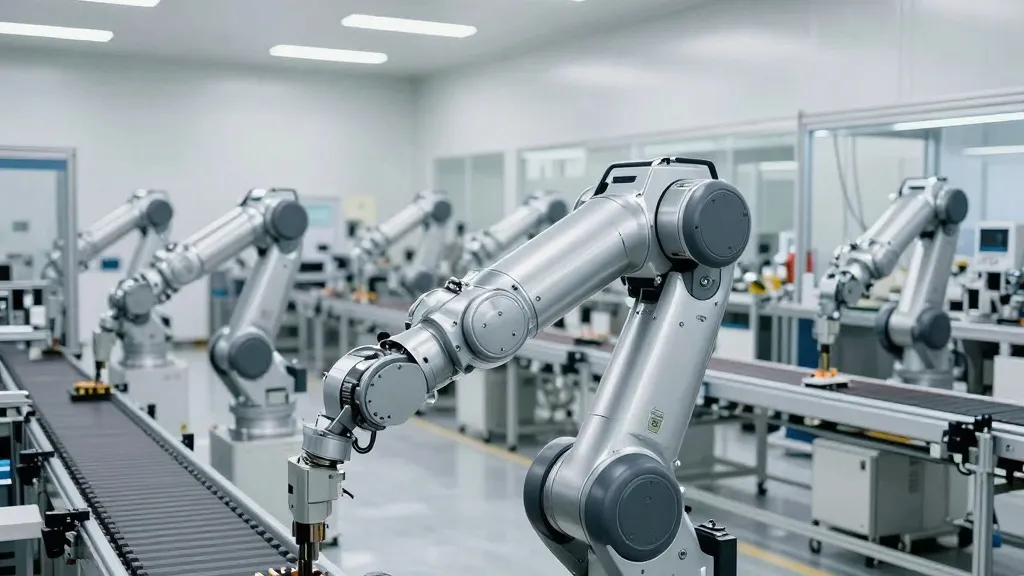
For Californians watching the automotive industry, the most immediate change is happening right in Fremont. The factory space that previously built Model S and Model X vehicles is now dedicated to a new product: the Optimus humanoid robot. Tesla has officially started building these bots on a high-volume line, marking a shift from prototype development to what the company calls production-quality manufacturing. This means the robots rolling off the line are no longer just test units; they are designed to meet the standards of a commercial product ready for real-world use.
The core claim from Tesla is that its current manufacturing process is now suitable for a commercial product. In its third-quarter shareholder letter, the company stated that the units coming off this specific line are the first to meet that production bar. To make room for this new operation, Tesla cleared out the old vehicle assembly equipment in just 46 days this spring. The new setup is sized for massive scale, with the long-term goal of producing one million units per year. Elon Musk noted on Wednesday’s earnings call that most of the necessary equipment is already in place, with weekly output expected to climb toward 20,000 robots as the line ramps up.
However, the path to full-scale production is not a straight line. Musk described the growth trajectory as a classic S-curve, noting that the initial slope is shallow. The engineering team is currently refining several key areas, including the robot's artificial intelligence, electromechanical design, and overall reliability. Tesla expects to complete this refinement work by the end of next year. At that point, the company plans to begin delivering Optimus units to outside companies, targeting roles that involve dangerous, repetitive, or 24/7 labor.
A significant open question is how these robots will learn without the massive data fleet that Tesla’s cars enjoy. Cars send driving data from millions of vehicles, but Optimus starts with zero units in the wild. To solve this, Tesla is establishing an "Optimus Academy." This initiative will use 10,000 to 20,000 robots to practice a wide variety of tasks. The data generated by these internal practice runs will be fed back into the system to improve the next version of the AI model. Essentially, every unit produced in Fremont becomes part of the training loop, allowing the robots to teach themselves through repetition.
Hardware improvements are also in the pipeline to support this learning process. Tesla plans to integrate its AI5 chip into the Optimus platform next year. Musk indicated that a new video demonstration showing the robot completing tasks driven by AI, rather than preprogrammed motions, should be released within one or two months. He emphasized that this approach is distinct from rival humanoid demos that rely on scripted routines, which he argued would not hold up in unpredictable real-world environments.
The supply chain is also gearing up for this expansion. In September, Tesla certified Tuopu, Joyson, and Sanhua as mass production partners for key components. Meanwhile, a much larger facility is under construction at Giga Texas, where recent drone footage shows the steel frame nearing completion. Musk has set a long-term target for that plant to produce 10 million robots per year. Executives noted that Optimus production costs are trending toward the manufacturing cost of the Cybercab, indicating that the robot is being engineered for volume from the start. The most challenging component remains the hands, which are currently the focus of much of the engineering effort.
While the vision is clear, the timeline depends on successfully navigating the shallow initial slope of the production curve. The transition from car manufacturing to robot production represents a significant operational shift for the Fremont plant, but Tesla’s strategy relies on using internal data generation to overcome the lack of a global fleet. As the line ramps up, the next few months will be critical in proving that the AI-driven approach works in practice.
Source: Teslarati