NASA's Path to the Moon: A Major Rework of the Mission Plan
The agency has unveiled a revised blueprint for its lunar landing missions, altering how spacecraft will connect and outlining a firm timeline for future Artemis flights.
By Lucia Herrera ·
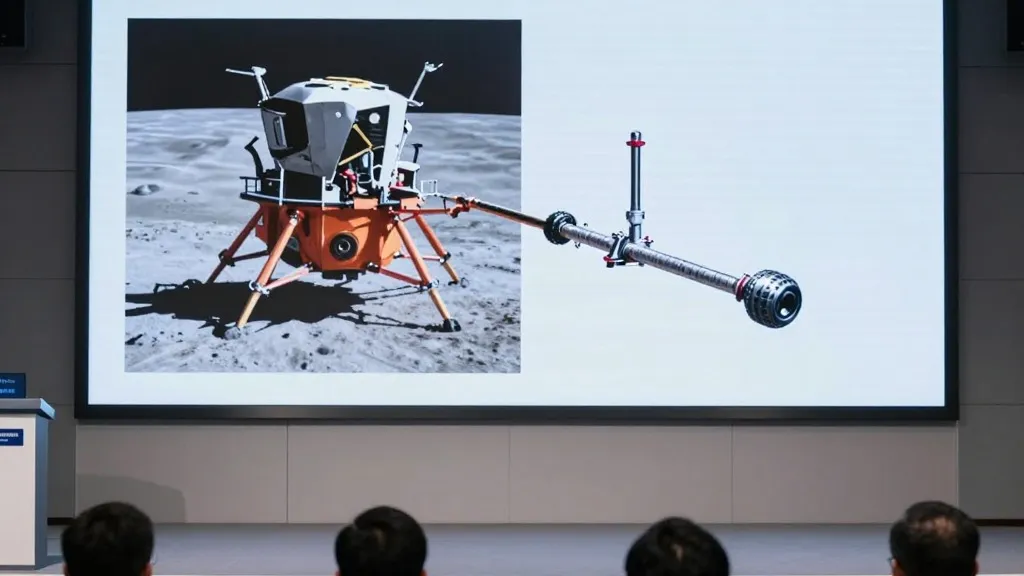
NASA has just detailed a significant update to its plans for returning astronauts to the lunar surface, aiming for a landing as early as 2028. In a lengthy briefing on Friday, the agency laid out a revised blueprint for its Artemis Program, outlining the specific steps for its missions and confirming a firm timeline for the first crewed landing attempt. This is the first time the space agency has presented these updated plans publicly, confirming substantial changes to the mission architecture.
The new approach alters how the different spacecraft will connect. For the mission involving SpaceX's Starship, the plan now calls for NASA's Orion spacecraft to dock with the lander in high-Earth orbit before both travel to the Moon. Meanwhile, the mission involving Blue Origin's lander will require four launches of its New Glenn rocket but will not involve any spacecraft-to-spacecraft refueling. The plan also includes the possibility of Blue Origin's Blue Moon lander meeting with Orion in low-Lunar orbit.
Despite these architectural changes, NASA is sticking to its announced schedule. The agency continues to anticipate launching the Artemis III mission by summer 2027. This mission is a demonstration flight designed to involve docking with both the Blue Moon and Starship landers near Earth. Following that, NASA is still tracking toward a 2028 launch for Artemis IV, which would involve an actual landing on the lunar surface.
The revised plan is a direct result of changes made earlier this year, particularly the cancellation of the Lunar Gateway. That decision resolved a long-standing technical issue for SpaceX, which had been seeking to remove a requirement to dock with Orion in a specific orbit around the Moon. With the Gateway's cancellation, that problem was solved for the company.
NASA Administrator Jared Isaacman expressed confidence in the revised schedule and plan. “This is an achievable path we are on right now,” Isaacman said. “We have the mandate, we have the resources, and the support from our stakeholders to be able to execute, and that’s what we intend to do.” However, it remains to be seen whether the agency can hold to these ambitious dates.
Source: Ars Technica