Democrats sweep midterms as voters reject Trump's record
With 62% disapproving of the president's job, Democrats gained control of both chambers of Congress and flipped key red states.
By Alexander Novak ·

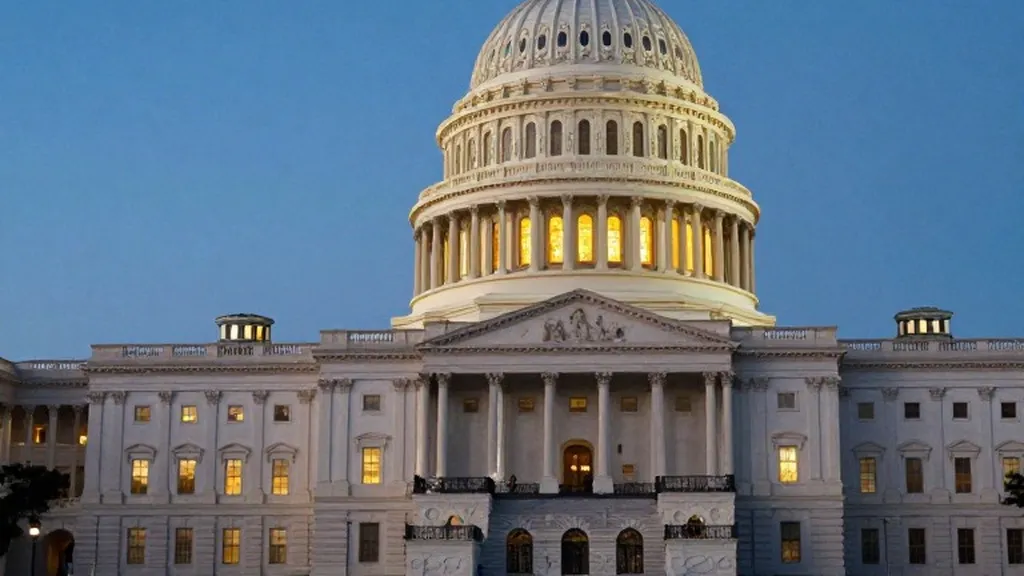
Voters delivered a decisive rejection of President Donald Trump on Tuesday night, handing Democrats control of both the House and the Senate. The margin of victory exceeded expectations, with the party gaining seats across the country in a result that mirrors the 2006 midterms. This outcome ends Republican dominance in Congress and shifts the balance of power to the opposition.
The shift was driven largely by dissatisfaction with the economy and the ongoing conflict with Iran. Since the war began, Trump's approval rating dropped from 48% to 36% in an average of polls. A joint survey by broadcast networks and the Associated Press found that 62% of voters disapproved of his performance as president. Three-quarters of respondents said they were angry or dissatisfied with the nation's direction.
Economic concerns topped the list of issues for voters. A plurality identified the economy as the most important topic, and two-thirds of respondents stated that Trump's policies had worsened economic conditions. The survey also indicated that 62% of voters believed the president prioritized his own interests over the country's. Gas prices rose during the conflict, adding pressure on households already feeling financial strain.
Republican attempts to secure long-term advantages through redistricting failed. Trump encouraged states with conservative leadership to redraw maps to gain more House seats, but the strategy backfired, particularly in South Texas. The changes made previously safe districts competitive, allowing Democrats to win races that were considered out of reach before the new lines were drawn.
Latino voters played a decisive role in the outcome. In the 2024 presidential election, Trump lost this group by five points. In this cycle, the group swung strongly against the president, driven in part by aggressive deportation tactics. Approximately 60% of all respondents disapproved of Immigration and Customs Enforcement, while 68% of Hispanic voters expressed disapproval of the agency's actions.
Texas emerged as a major battleground where Democrats achieved broad success. James Talarico won the Senate seat by roughly 12 points, securing 1.1 million more votes than his opponent. This marks the first time Texas has sent a Democrat to the Senate since 1988. Gina Hinojosa won the governor's race by seven percentage points, a margin of nearly 700,000 votes. Democrats also flipped two congressional districts that Trump had won by at least 14 points in 2024.
The victory in Texas occurred despite heavy Republican spending. The party spent more than $413 million on the Senate race but still lost. Democrats also won the lieutenant governor, attorney general, and railroad commissioner races. The results suggest the state's demographics may be shifting permanently, though 2028 will determine if these gains hold.
Democrats now face the challenge of governing without a filibuster-proof majority in the Senate. New York Senator Chuck Schumer promised that relief is on the way, but legislative progress will depend on negotiation with a resistant Republican caucus. Trump posted an image of a red hat with the word VETO on his social media platform just before midnight on election night.
The Democratic Party still faces internal divisions and lower favorability ratings compared to their previous peak. The national party holds a 47% favorable and 53% unfavorable rating, slightly better than the Republican Party's 41% favorable and 59% unfavorable. Polls generally underestimated the strength of the Democratic surge, with the final generic ballot advantage reaching at least 18 points compared to pre-election estimates of 8 points.
Source: LAist