Gas prices unlikely to drop soon after election
Even if Democrats force an end to the Iran conflict, fuel costs could stay high for six months or more due to supply chain delays.
By Hassan Lawson ·
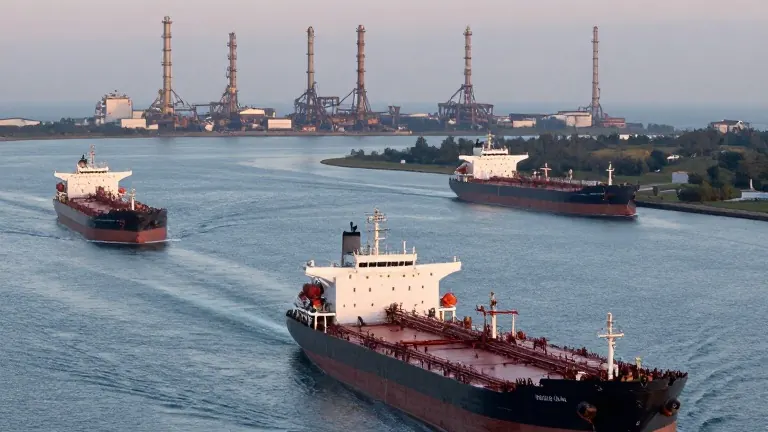
Voters punished the current administration over soaring fuel costs, but experts say that does not guarantee immediate price cuts at the pump. Democrats are set to control Congress, driven largely by anger over how the war in Iran has inflated the price of gasoline and diesel. Despite this political shift, energy analysts caution that the path to lower prices is slow and complicated by global logistics.
The conflict has disrupted a major artery for global oil. Before the war, one fifth of the world's oil passed through the Strait of Hormuz. As the fighting restricted that waterway, Brent crude prices jumped from roughly $70 a barrel in late February to a peak near $110. Prices have since retreated to close to $95. This spike has pushed the average cost of a gallon of gasoline to $4.12, which is about $1 higher than a year ago. Diesel reached a record $6.52 in September and remains $2.50 more expensive than in the previous year, according to AAA data.
New congressional leaders cannot immediately fix these numbers. Members of the incoming Congress will not be sworn in until January. While Democrats can pressure the president to end the war by restricting war spending, they lack direct control over global oil markets. Senate Minority Leader Chuck Schumer told reporters on Wednesday that his party intends to end the conflict and lower the cost of living, stating that relief is on the way.
However, the president retains broad executive authority over military strikes and sanctions. Trump has sent mixed signals, warning Gulf states of a new campaign while acknowledging voter dissatisfaction with gas prices. On election night, he told The New York Times he understood the frustration. The following day, Vice President JD Vance posted on social media that the war was the reason for the election loss.
If a peace deal is reached, the drop in prices will not be instantaneous. Jaime Brito, executive director of refining and oil markets for Dow Jones Energy, estimates that crude prices could fall by $15 to $20 per barrel within two to three days of a formal announcement. However, getting that cheaper crude to consumers takes time. Ships currently detouring around the Strait of Hormuz must return to their original routes. This process can cause traffic bottlenecks in shipping lanes.
Refining and distribution add further delays. Brito suggests it could take three months for gasoline and diesel to return to prewar levels after a ceasefire. Jorge León, head of geopolitical analysis at Rystad Energy, predicts a longer timeline. He estimates it will take six months for crude to stabilize and another one to two months for fuel prices to follow. Both analysts agree that hiccups could extend this process to a full year.
The war in Ukraine presents an additional variable. Russian refineries supply a large share of global diesel. If Ukraine continues attacking those facilities, diesel prices may remain high even if the Iran conflict ends. U.S. refineries are currently running above 90% capacity, leaving little room for emergency maintenance. Furthermore, freight and insurance costs have risen because ships must take longer, riskier routes around the strait. These added expenses keep the cost of moving oil elevated. Brito noted that a definitive end to the conflict is necessary for prices to normalize, though expensive gasoline could become the new standard if hostilities drag on.
Source: KPBS
More Business · Scam Watch · Report a business · Got a Story?