Michigan voters decide fate of Proposal 2 and El-Sayed's Senate bid
A ballot initiative to bar utility companies from making state campaign donations stands alongside the race for Michigan's open U.S. Senate seat.
By Lucia Orlov ·
Voters in Michigan face a direct choice on campaign finance rules in Tuesday's election. Proposal 2 appears on the state ballot. If the measure passes, utility companies will be barred from making campaign donations in state elections. The initiative is sponsored by a group named Michiganders for Money Out of Politics. This rule would change how money flows into state political races. It targets a specific sector that has long funded local and state candidates.
The election also decides the state's open U.S. Senate seat. Abdul El-Sayed runs against a former member of Congress. El-Sayed served as a former health official in the state. His campaign slogan promises to move money out of politics and into voters' pockets. It also calls for Medicare for all. The healthcare platform draws on his prior public health roles. The slogan echoes the policy goals of Sen. Bernie Sanders of Vermont. However, El-Sayed brings a specific state-level background to the argument. His platform reflects issues already visible on the state ballot.
El-Sayed is attempting to become the first Muslim member of the U.S. Senate. The campaign has focused heavily on his faith. The president and vice president of the United States have suggested his religion should disqualify him. His opponent, a former member of Congress, has also raised his faith as a concern. Some members of his own party question whether a Muslim critic of the Israeli government fits the party's direction. These attacks have marked the campaign season. They mirror historical battles faced by religious minorities in high-level races.
El-Sayed addressed the division caused by religion during a recent interview. He noted that people often use religion to divide communities. He argued that faith should be a tool for inclusion rather than exclusion. He described prayer as a shared human experience. He said the small differences in how people pray are opportunities for reflection. He believes incorporating different prayers shows a recognition that people are small in the eyes of a creator. He emphasized the need for people to rely on each other.
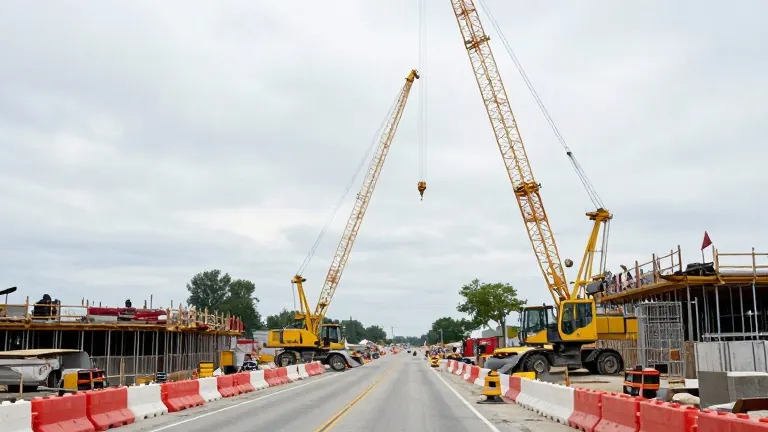
The state's infrastructure provides a backdrop for the campaign. Road construction is widespread across Michigan. This reflects a long-standing promise by former Governor Gretchen Whitmer to fix roads. Whitmer began pitching this goal in 2018. The state has since completed work on 26,000 lane miles and 2,000 bridges. This physical change parallels the political shift currently underway. The state will have a new governor after eight years with the current administration.
Gary Peters will not serve as one of Michigan's senators after 2014. This marks a change in the state's representation in Washington. The outcome of the election will determine which candidate's slogans gain traction. It will also decide how much influence utility companies hold in state politics. The results will shape the state's direction for the next term.
The campaign has drawn national attention due to the money spent and the stakes involved. The election is seen as a test for the country's political direction. It involves more than a single state's interests. It reflects broader debates on money in politics and religious identity. The voters will decide these issues on Tuesday.
Source: Las Vegas Sun