57 Million Votes In: Both Parties Bet on Ground Game as Polls Open
With early voting surging past previous records, party leaders emphasize mobilization as the key variable in a competitive House race.
By Alexander Novak ·
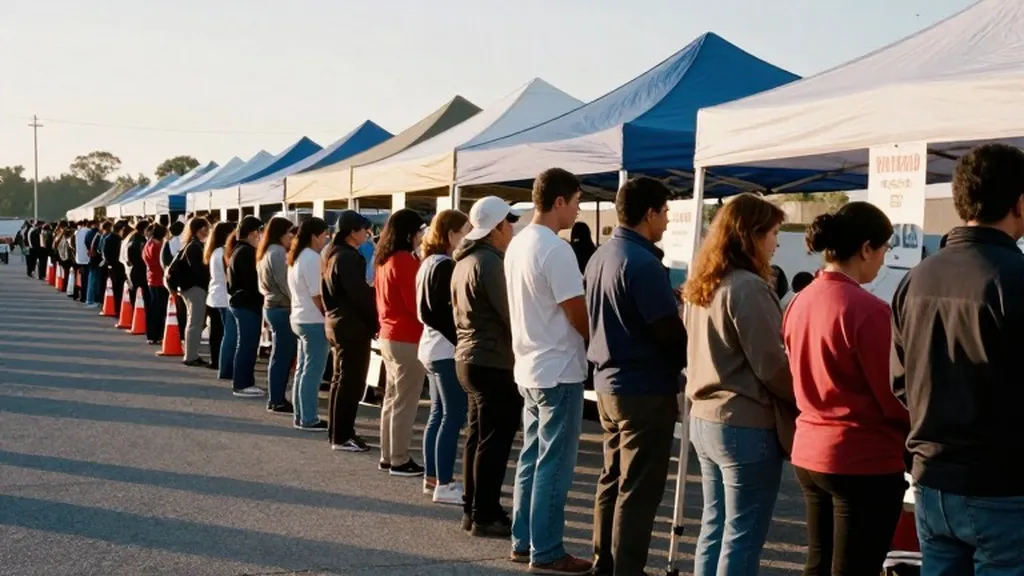
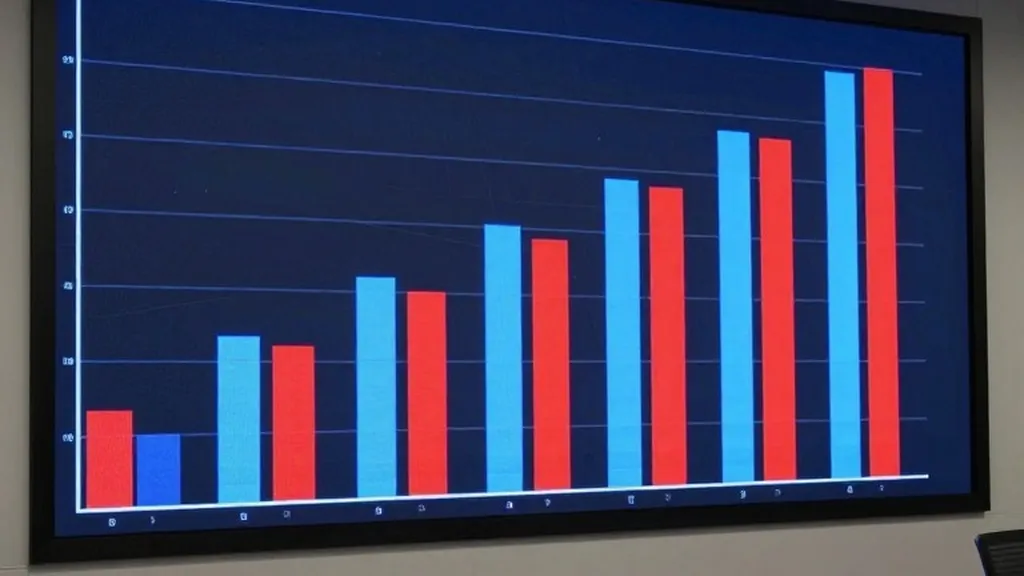
It is Tuesday, November 3, 2026, and the midterm election is underway. All 435 seats in the U.S. House of Representatives are up for grabs, along with 35 Senate seats and 36 governorships. The outcome will determine which party controls Congress for the final two years of President Donald Trump's second term. According to Ballotpedia, Democrats currently hold 214 House seats, while Republicans hold 218, with one independent and some vacancies. To secure a majority in the House, Democrats need a net gain of three districts. Republicans can afford to lose no more than two seats to maintain their current advantage.
The Senate race is equally critical, with 35 seats contested. Republicans hold 53 seats, Democrats hold 45, and two independents caucus with the Democrats. Democrats require a net gain of four seats to take control of the chamber. Republicans can lose only two seats to keep their majority. Ballotpedia identifies 13 Senate races as battlegrounds. These include contests in Georgia, Michigan, Iowa, and Kansas. The Associated Press notes that the election is being viewed as a referendum on the administration, with voters focused on high prices and an unpopular war with Iran.
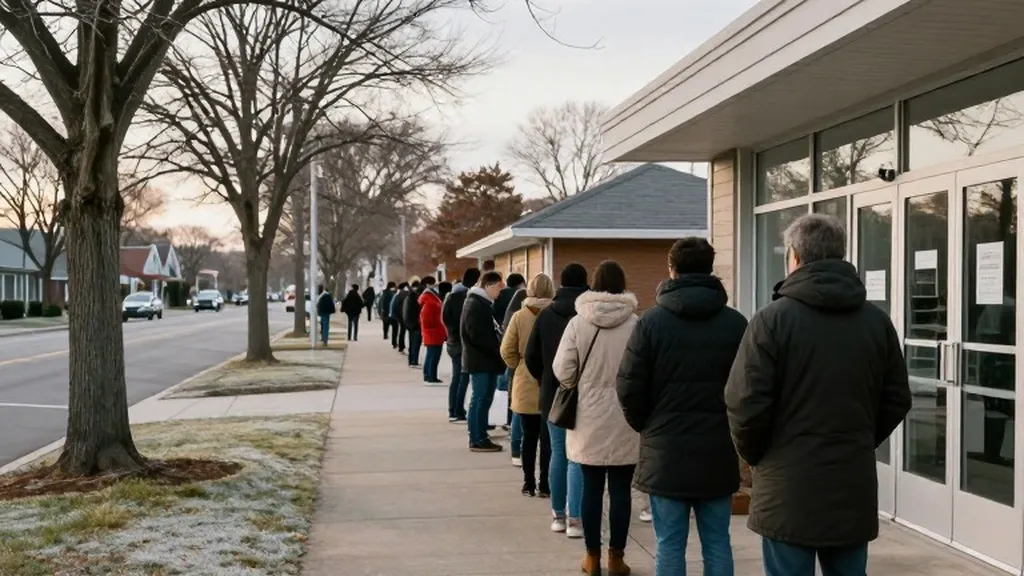
Early voting numbers have already set a pace for this cycle. As of Monday, more than 57 million people had cast their ballots. This figure surpasses the early vote totals from four years ago in many closely watched states. The surge in participation has led both parties to focus heavily on their ground games. RNC Chairman Joe Gruters emphasized the importance of mobilization, stating, "Everything depends on turnout. If we turn out our voters, we win, and that's what we've been planning for."
Democratic leaders are echoing this sentiment with a slightly different tone. DCCC Chair Rep. Suzan DelBene told the Associated Press, "The American people are angry. They want change." She pointed to the frustration felt by voters regarding the cost of living and health care. James Moore, a 57-year-old librarian in Raleigh, North Carolina, expressed this sentiment on Tuesday. "I'm paying more taxes. I'm paying more for my healthcare. I'm paying more for everything," Moore said. His comments reflect the broader mood among Democratic-leaning voters who are looking to shift power in Congress.
Republicans are bracing for the possibility of losing the House while fighting to hold the Senate. The Associated Press reports that one or two seats could tip the balance in either chamber. Democrats, meanwhile, are described as cautiously optimistic. The party is counting on the momentum from the early vote surge to help flip competitive districts. Ballotpedia counts 46 battleground districts in the House. Of these, 25 are currently held by Democrats and 21 by Republicans. This distribution suggests a tight race where small shifts in turnout could have significant consequences.
The financial aspect of the election is also a major factor. The 2026 elections are likely to be the most expensive in history. Republican committees have outraised and outspent Democratic committees, aided by Trump-affiliated groups and Elon Musk. However, at the candidate level, Democrats have outraised their opponents. According to an AP analysis of AdImpact data, 88.1 percent of Republican general election TV ad spending went to states and districts that Trump won in 2024. This includes more than $850 million spent in areas where he won by 10 points or more.
Voter Mark Barker of Palm Beach Gardens, Florida, offered a different perspective. "I've just been following Trump the whole time. I really think he's doing an awesome job," Barker said. His optimism contrasts with the concerns of other voters who are worried about economic trends. AP-NORC polling shows that 35 percent of U.S. adults approve of Trump's job performance. Only 25 percent approve of his handling of the economy. About seven in 10 Americans say the country is heading in the wrong direction, with most blaming the president for high prices.
Polls are open across the country, with hours varying by state. In Florida, polls are open from 7 a.m. to 7 p.m. Eastern and Central time. In California, which uses a largely mail-based system, polls are open from 7 a.m. to 8 p.m. The U.S. Postal Service has added hours, staff, and special lines to ensure that mail ballots are counted on time. A federal judge temporarily barred the Trump administration from carrying out a plan to prevent noncitizen voting, a move that critics said could risk disenfranchising eligible voters. This legal development adds another layer of complexity to an already high-stakes election.
The administration has continued to make claims about voting fraud, including that noncitizens vote in large numbers. The Justice Department has threatened to prosecute local election officials, causing concern among Democrats about interference and intimidation. In Alaska, the Trump administration filed a lawsuit related to the certification of the Senate result. These actions have kept the focus on election integrity as voters head to the polls or send in their mail ballots. The stakes are high, with potential impeachment proceedings looming if Democrats win even one chamber of Congress.
House Democratic Leader Hakeem Jeffries has outlined a 100-day agenda focused on the cost of living and oversight if his party gains control. A strong Democratic performance would also boost potential 2028 candidates such as Gavin Newsom, JB Pritzker, and Pete Buttigieg. Conversely, a Republican hold would allow the party to continue its current trajectory. The new congressional maps in states like California, Florida, and Texas are also in play, with some districts drawn in ways that may not reflect the final vote. As the day progresses, the focus remains on whether the 57 million early votes will translate into a decisive outcome or a narrow margin.