Iran War Dominates Midterm Ballots as Voters Weigh Economic Costs
With polls open across the nation, the conflict with Iran has become a central factor in the fight for congressional control.
By Hassan Lawson ·
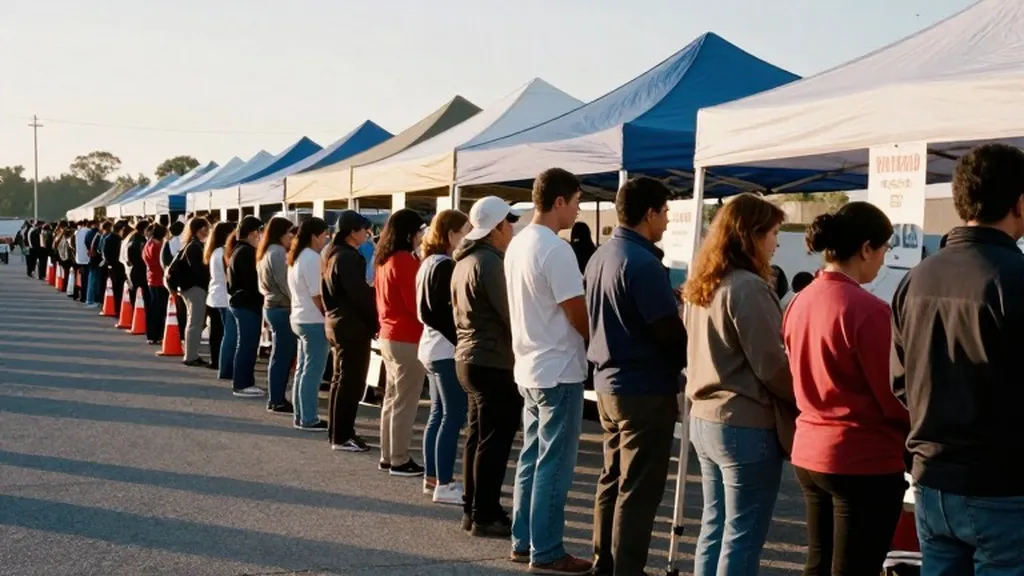
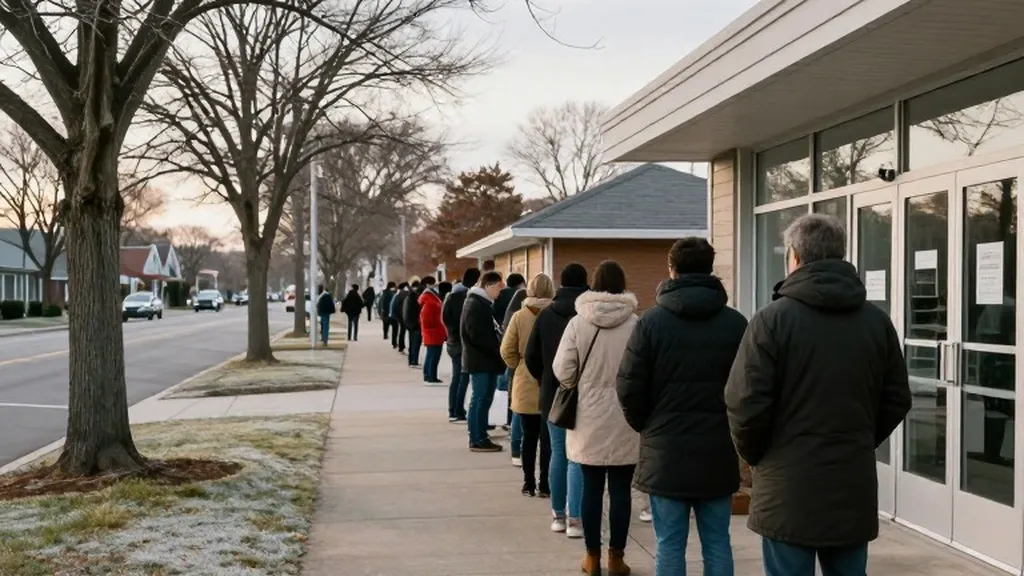
Voters across the United States are casting ballots on Tuesday, November 3, 2026, in a midterm election that determines which party controls Congress for the final two years of President Donald Trump's second term. The Associated Press describes the day as a referendum on the administration, noting that many Americans are struggling with high prices and are angry over an unpopular war with Iran. This conflict has emerged as a defining issue for the electorate, influencing how voters approach the numerous races on the ballot in this pivotal election cycle.
The stakes are high in both chambers of Congress. All 435 seats in the U.S. House are up for grabs, with Democrats needing a net gain of three districts to secure a majority. In the Senate, 35 seats are contested, and Democrats require a net gain of four seats to take control. Ballotpedia identifies 46 battleground districts in the House and 13 competitive Senate races, highlighting the tight margin that could decide the balance of power in Washington. These numbers underscore the difficulty of the task ahead for both parties as they battle for legislative influence.
Public sentiment reflects the economic anxiety driving this election. According to AP-NORC polling, only 35 percent of U.S. adults approve of President Trump's job performance, while just 25 percent approve of his handling of the economy. Approximately seven in 10 respondents say the country is heading in the wrong direction, with most blaming the president for rising costs. This dissatisfaction provides fertile ground for Democrats, who are cautiously optimistic about their chances to make gains in both the House and the Senate despite historical midterm trends.
The war with Iran serves as a focal point for voters who feel the strain of global conflicts on their daily lives. The Associated Press notes that voters are angry over the conflict, a sentiment that has permeated campaign trails and local discussions. For Democrats, this anger is a key asset in their push to gain oversight powers. If they secure a majority in either chamber, investigations and possible impeachment proceedings become likely, a prospect that has energized the party's base and motivated turnout in key districts.
Republican strategists are bracing for potential losses in the House while fighting to hold the Senate. They have relied on significant financial advantages, with Republican committees outraising and outspending their Democratic counterparts. This spending was bolstered by Trump-affiliated groups and contributions from Elon Musk. However, the effectiveness of this money is being tested in districts where the war and economic concerns have shifted voter loyalty. Republicans can afford to lose no more than two House seats to retain their majority, a narrow cushion that leaves little room for error.
In the Senate, the race is particularly tight in states where the 2024 presidential margins were close. Maine is rated as a toss-up by all four major race rating services, while Iowa and Kansas are seen as toss-ups or leaning Republican. Georgia and Alaska are viewed as competitive, with the latter involving a lawsuit filed by the Trump administration regarding the certification of the result. These races are critical because a shift in even one or two seats could tip the balance of power in the upper chamber, altering the administration's ability to pass legislation and confirm judicial appointments.
Democratic leaders are framing the election as a choice between change and continuity. Rep. Suzan DelBene, chair of the Democratic Congressional Campaign Committee, stated that the American people are angry and want change. This message resonates with voters like James Moore, a librarian in Raleigh, North Carolina, who cited higher taxes and healthcare costs as primary concerns. The Democratic platform emphasizes oversight of the administration and a focus on the cost of living, aiming to address the grievances of middle-class families who feel left behind by economic policies.
Meanwhile, Republican Chairman Joe Gruters emphasized the importance of turnout, saying that if the party turns out its voters, they will win. President Trump held dozens of rallies to boost enthusiasm, ending his schedule in Salina, Kansas, where he urged voters to pretend he was on the ballot. Many Republican candidates, however, kept their distance from the president, a strategy that reflects the complex dynamics of the current political landscape. This approach aims to isolate the president's popularity from the specific candidates running for office in competitive districts.
The administration's handling of election administration has also drawn attention. A federal judge temporarily barred the Trump administration from carrying out a plan to prevent noncitizen voting, a move critics say risks disenfranchising eligible voters. Additionally, the administration was ordered to stop demanding that California election officials segregate ballots cast by people on its lists of suspected noncitizens. These legal battles add another layer of complexity to an already contentious election, with both parties watching closely for potential interference as the Justice Department threatens to prosecute local election officials.
Beyond the immediate political implications, Wall Street is watching the results for clues about future economic policy. Reuters reports that the outcome could add to investor concerns about artificial intelligence spending and debt ceiling negotiations. The control of Congress will determine the legislative agenda for the next two years, including potential investigations into the war with Iran and other executive actions. This oversight power is a central demand of the Democratic platform and a key reason for the high stakes associated with today's vote.
As polls close in various time zones, the nation awaits the first returns that will indicate which party has made the necessary gains. More than 57 million people had already voted as of Monday, surpassing the early vote of four years ago in many closely watched states. This high level of participation suggests a deeply engaged electorate, driven by the significant issues at stake. The results will ultimately determine whether the administration faces a cooperative or an adversarial Congress in the final stretch of President Trump's second term.