Voters Choose New House, 33 Senators, and 36 Governors in High-Stakes Election
Economic frustration and high-profile retirements define the 2026 midterms, with polls suggesting a potential Democratic surge in key states.
By Alexander Novak ·
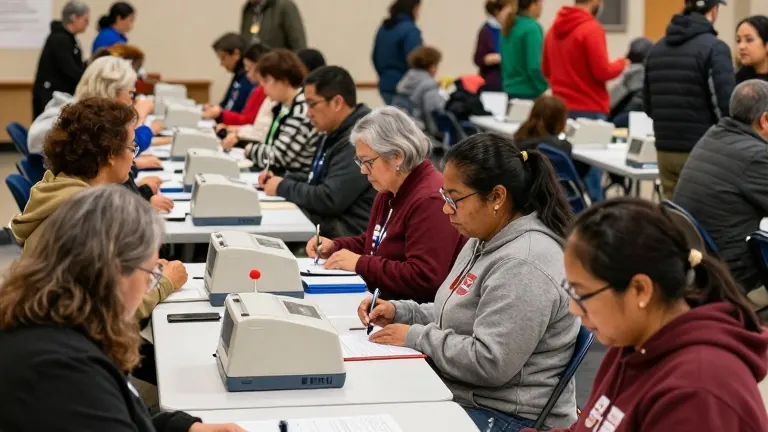
American voters will decide the composition of the entire federal government and 36 state governments in the November elections. The cycle involves the renewal of all 435 House seats, 33 Senate seats, and two special Senate elections. This is the most contested midterms in recent history due to the volume of open seats and public dissatisfaction with the current administration.
Economic concerns drive the mood of the electorate. Voters express discontent with inflation caused by tariffs, high prices for gasoline and diesel, and the cost of medical insurance. The administration’s handling of Middle East conflicts and immigration enforcement operations also shapes the political climate. President Donald Trump faces growing disapproval in a polarized environment.
The Senate race draws intense attention because of the high number of incumbent officials stepping down. Many representatives and senators announced they are leaving office or not seeking re-election to run for other positions. Term limits also force many governors to leave office, creating open contests across the country. Polls and models predict a blue wave, though the exact magnitude remains uncertain.
Several Senate races could shift the balance of power in traditionally Republican states. In Alaska, Democrat Mary Peltola challenges incumbent Dan Sullivan for his seat. A third candidate also named Dan Sullivan, a Republican, runs in the same race. In Ohio, former Senator Sherrod Brown seeks to reclaim his seat left by Vice President JD Vance, facing Republican Jon Husted. Iowa sees former Paralympian Josh Turek compete against Representative Ashley Hinson for the seat vacated by Joni Ernst.
Battles in the South and Midwest offer potential surprises. In Georgia, young Democrat Jon Ossoff defends his seat against Republican Mike Collins. North Carolina features an open seat contested by former Governor Roy Cooper and Republican Michael Whatley. Michigan could elect its first Muslim senator if Democrat Abdul El-Sayed defeats Republican Mike Rogers. Texas may see its first Democratic senator since 1993 if James Talarico beats Attorney General Ken Paxton, who faces corruption accusations.
Other key Senate contests include Florida, where Ashley Moody runs against Angie Nixon of the Social Democrats for the seat vacated by Marco Rubio. New Hampshire offers a race between a returning Republican senator and young Democrat Representative Chris Pappas. Maine presents an opportunity for Democrats to take the seat held by moderate Republican Susan Collins, who is positioned away from Trump’s views.
The House of Representatives will see changes in specific districts despite most incumbents retaining their seats. Nine states use new electoral maps for this cycle. Key battlegrounds include border districts in California, Arizona, New Mexico, and Texas. Three of Iowa’s four districts are competitive, as are the central and northern valleys of California. The district containing Omaha, Nebraska, is also in play.
Suburban areas around major cities will determine the House majority. Competitive zones include Phoenix, Denver, Austin, Dallas, Houston, San Antonio, and Miami. Races in southern Washington, Wisconsin, Michigan, Ohio, Pennsylvania, New York, North Carolina, and Maine will also be closely watched. These districts often serve as indicators of national sentiment.
Governors’ races show increasing competitiveness as campaigns progress. In Nevada, Republican Joe Lombardo seeks re-election in a tight race. Alaska Democrats may capture the governor’s mansion along with the Senate seat. Kansas, currently under Democratic control, could flip to Republican hands. Iowa, a Republican stronghold, might elect a Democratic governor for the first time in 20 years. Ohio’s outcome remains uncertain with an open Republican seat.
Georgia features a close race between a former Democratic mayor of Atlanta and a healthcare business owner. Other states with notable races include Arizona, Texas, Wisconsin, and Florida. These contests do not threaten the current party control in those states but remain important for state-level policy.
Source: KTVW-DT