Iraqi Militias Accuse US of 171 Airspace Breaches Since Coalition Withdrawal
The Islamic Resistance in Iraq claims to have documented intrusions by American fighter and reconnaissance jets between September 30 and October 23, complicating Prime Minister Zaidi's disarmament plan.
By Hassan Lawson ·
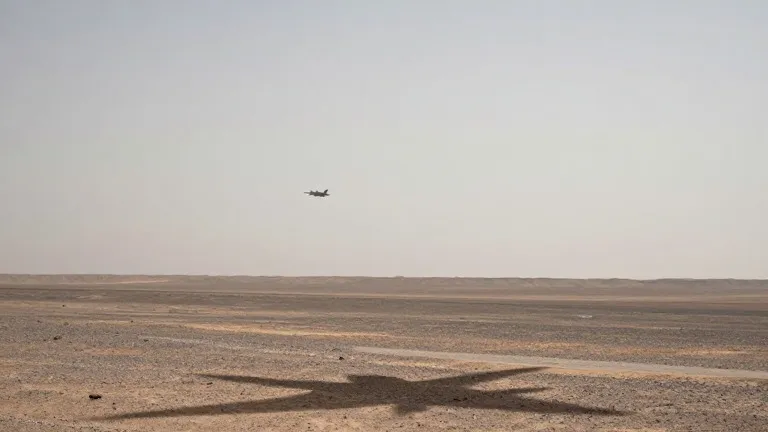
The Islamic Resistance in Iraq, an umbrella organization for Iran-backed militias, announced on Friday that it has recorded 171 violations of Iraqi airspace by United States military aircraft since the end of September. The group stated that the intrusions were carried out by fighter jets and reconnaissance planes. The allegations cover the period from September 30 through Friday. The militias did not provide independent verification for their count.
The accusations were issued at a time of heightened tension between the Iraqi government and armed factions. The US-led anti-ISIS coalition formally concluded its military mission in Iraq on September 30. Iraqi Prime Minister Ali al-Zaidi has used the withdrawal to push for a national disarmament plan. The initiative aims to place all weapons under the control of the state. The plan is scheduled to take full effect by June 2027.
The militias criticized the Iraqi government for appeasing Washington. They expressed dissatisfaction with Baghdad's decision to reduce commercial flights and close border crossings with Iran. The Islamic Resistance in Iraq continues to support Iran amid speculation about a new war. The group views the US presence in Iraqi airspace as a continuation of American influence despite the official end of the coalition mission.
Prime Minister Zaidi extended the deadline for the disarmament effort to June 30, 2027. In an interview with Iraqi state media, he stated that no weapons will remain outside the framework of the state by that date. The deadline follows a split among militia factions regarding the initiative. Some groups have agreed to cooperate, while others have rejected the policy.
According to reports from Rudaw, Kataib Hezbollah and Harakat al-Nujaba remain opposed to the disarmament process. In contrast, Harakat Ansar Allah al-Awfiya and Kataib Sayyid al-Shuhada have expressed a willingness to cooperate with government measures. Zaidi said in a separate interview that Iraq will soon be a state free of factions, with weapons held exclusively by Iraqi security forces.
The State Department issued an updated travel advisory for Iraq on Saturday. The warning cited increasing regional threats that could affect security in the country. It noted the threat of increased attacks by the Iranian-backed Houthis. The advisory maintained the existing warning against all travel to Iraq. It stated that Houthi strikes on Saudi Arabia could lead to wider regional escalation.
The State Department warned that the Iraqi government cannot guarantee the safety of US citizens against sudden outbreaks of violence. It identified armed groups inside Iraq as specific threats. The advisory noted that terrorists, including ISIS and Iran-aligned militias, encourage and conduct attacks against US persons and interests. Potential targets include airports, energy infrastructure, hotels, and diplomatic facilities.
The department cited drones, indirect fire, and improvised explosive devices as methods used by these groups. It warned that militias threaten American citizens and international companies. The advisory highlighted the potential for hostilities to escalate rapidly beyond the immediate area of conflict.
US intelligence warned of increased Iranian efforts to assassinate American diplomats and officials in the Middle East. A memorandum dated Friday from National Intelligence Director Jay Clayton to Secretary of State Marco Rubio stated that some alleged plots had reached advanced stages. Washington has reduced staffing at several embassies in response to these concerns.
The Iranian Islamic Revolutionary Guard Corps said on Saturday that it targeted a gathering center of the Kurdistan Free Life Party (PJAK) inside Iran. Clashes between the IRGC and the PJAK's armed wing have intensified over the last week. Iran used drones and artillery against mountainous areas where Kurdish fighters operate. The Mehr News Agency described the operation as a preemptive strike against members preparing attacks.
Source: The Jerusalem Post