Israeli Opposition Divides Over 58-Seat Minority Plan
Eisenkot seeks to form a cabinet without a full majority, while Bennett and Liberman demand a traditional Zionist government or another election.
By Lucia Orlov ·
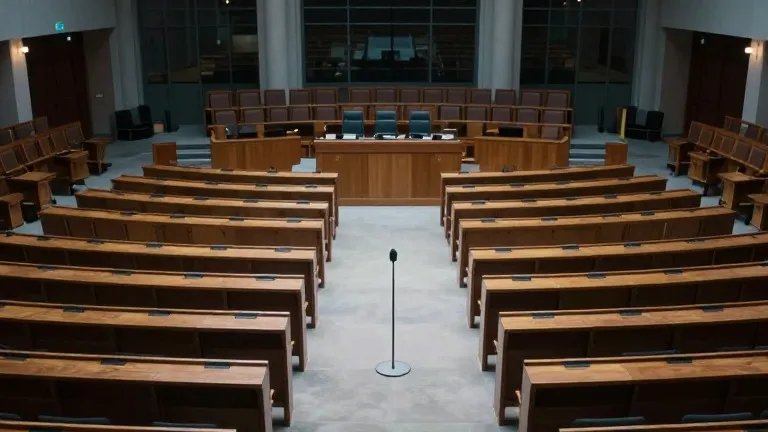
Prime Minister Benjamin Netanyahu’s rivals are split on how to take power after the upcoming elections. Gadi Eisenkot wants to lead a minority government that could operate with as few as 58 seats. Naftali Bennett and Avigdor Liberman reject that path, insisting on a stable Zionist majority or a return to the polls.
Most current polls show the anti-Netanyahu camp ahead of the outgoing coalition. However, the Zionist parties in that bloc do not yet have the 61 seats required for a standard majority government. Eisenkot proposes a workaround. He argues that a government can be sworn in after winning a confidence vote without permanent backing from 61 members of the Knesset. This would allow the new administration to take office and then work to expand its support base.
The legal distinction between forming a government and removing an incumbent creates a specific constraint for Eisenkot’s plan. Swearing in a new cabinet requires a majority in a confidence vote, meaning abstentions can count in favor of the new team. Removing a sitting government via a constructive vote of no confidence, however, still requires 61 votes. Consequently, the minority strategy could help form a new government but would not allow the opposition to immediately oust Netanyahu if he remains in a caretaker role.
Bennett and Liberman view this flexibility as a risk. Liberman categorically rejects a minority government, even a transitional one. He states that another election is preferable to a government that does not meet his standards. Bennett, who leads the Beyachad list with Yair Lapid, also demands a Zionist government and refuses to rely on the votes or abstentions of Arab parties. Both leaders see their own candidates as natural successors to the premiership, creating a rivalry that complicates the bloc’s unity.
The opposition bloc is also moving to replace Knesset Speaker Amir Ohana before any coalition deal is finalized. The parties aim to secure control of the parliamentary agenda, potentially using votes from Arab party members to elect a new speaker. This move would allow Netanyahu’s opponents to set the legislative schedule even if he remains as head of a caretaker government. Names under consideration include Chili Tropper, Matan Kahana, and Elazar Stern from Eisenkot’s list, as well as candidates from the Bennett-Lapid and Democrat lists. Liberman estimates that up to one-third of outgoing coalition members might vote against Ohana, though they would need to do so in an open vote.
Beyond the speaker and leadership questions, the parties are coordinating on a list of policy priorities. The bloc wants to advance a state commission of inquiry into the events of October 7 and make changes to conscription law. They also seek limits on the prime minister’s tenure and the repeal of certain judicial changes made by the outgoing government. Liberman specifically wants to bar anyone facing criminal charges from serving as prime minister. Party teams have begun working on these details, but no binding agreement exists on the order of operations. The memory of the previous Bennett-Lapid government, which collapsed before finishing its legislative agenda, casts a shadow over these early negotiations.
Source: The Jerusalem Post