Ukraine Drone Speed Cap Lifted
President Zelenskyy confirmed that Starshield satellite links have returned to full speed, ending a two-week disruption that hampered frontline operations.
By Hassan Lawson ·
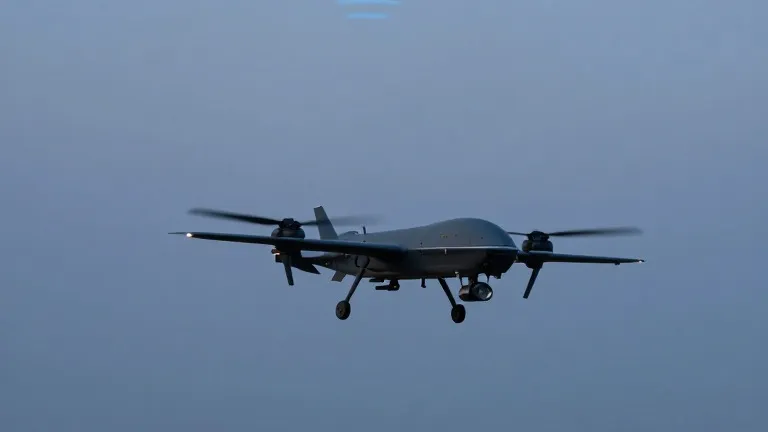
Ukrainian forces regained full-speed satellite connectivity on October 24, allowing drones and other assets to operate at their previous velocities. President Volodymyr Zelenskyy stated on Telegram that the Starshield system is now functioning at the speed required for frontline logistics and air defense. The restoration ends a period of restrictions that had limited equipment to lower speeds for nearly two weeks.
SpaceX's Starshield network, a military-focused service distinct from the commercial Starlink system, supports critical Ukrainian operations. Defense Minister Yevheniy Khmara told RFE/RL's Ukrainian Service that monitoring data confirmed connectivity on equipment moving faster than 400 kilometers per hour. Previously, satellite links had dropped at approximately 161 kilometers per hour, a threshold that sharply reduced the effectiveness of drone interceptors and other high-speed assets.
Khmara attributed the fix to direct dialogue and the president's persistent stance. However, the entity that imposed the initial limits remains unclear. Serhiy Beskrestnov, a defense technology adviser to Zelenskyy, suggested a connection to recent tensions between Kyiv and Washington, though no official link has been established. The Trump administration denies that the White House or US government officials requested the changes.
Elon Musk stated that the US government controls Starshield, with military and presidential decisions governing speed and usage. The Wall Street Journal reported that President Donald Trump called Musk to urge the lifting of restrictions. When asked about the call, Trump said, "if there is a problem, I will get it straightened out." Lawmakers from both parties in Congress have demanded clarification on who authorized the changes and sought guarantees for reliable access.
The speed limits emerged alongside other US policy moves that Ukrainian officials view as favorable to Russia. In the past two weeks, Trump announced a deal encouraging Russian diesel exports and waived pending sanctions. He also urged Kyiv to halt attacks on Russian oil refineries. Zelenskyy initially considered a pause in such strikes but declared Kyiv "done" with unilateral pauses after Russian strikes continued.
Combat operations proceeded throughout the night. Ukrainian air defense forces reported shooting down 100 of 130 Russian drones. Attacks on 15 locations resulted in at least two deaths. Ukrainian forces struck two industrial facilities and a military airport in Russia. One facility in Oryol produces components for cruise and ballistic missiles, while another in Togliatti manufactures rubber products for solid rocket fuel.
Most of Russian-occupied Crimea lost electricity in the early hours of October 24. The blackout affected Simferopol, Sevastopol, Yalta, Kerch, and Feodosia. NetBlocks recorded an almost complete loss of internet connectivity. Russian authorities stated that mobile service reached only 40 percent of the region and that public electric transport in Sevastopol was suspended. Sergei Aksyonov, the Russian-appointed head of the occupation administration, blamed the outage on a drone attack on main power lines. Ukrainian monitoring channels reported a fire at the Taman electrical substation in Russia's Krasnodar region, which supplies Crimea via the Kerch Strait.
Source: RFE/RL