One in 10 voters faces new congressional districts for November 2026
Midterm voting maps are finalized in all 50 states, with millions of voters in Texas, California, and Florida finding themselves in different House districts than in 2024.
By Lucia Orlov ·
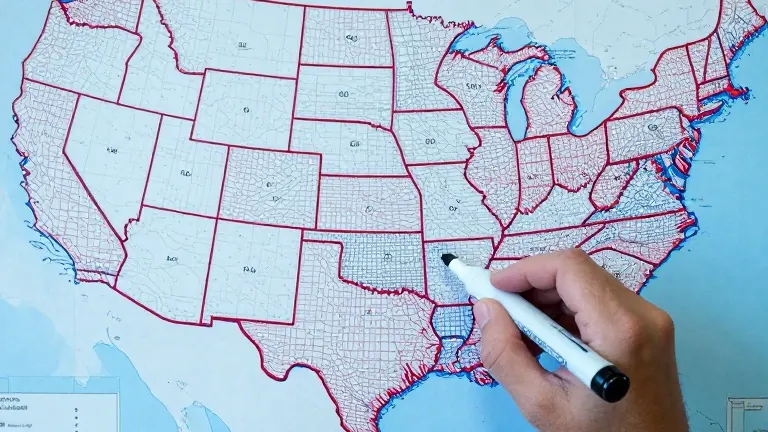
More than 6.9 million potential voters in Texas and over 6.3 million in California will cast ballots in different U.S. House districts in November than they did in the 2024 general election. An Associated Press estimate indicates that approximately one in 10 potential voters nationwide occupies a new congressional district for the upcoming midterms.
The redistricting process concluded after the U.S. Supreme Court resolved a long-standing legal dispute in Missouri. The Court ruled that the state must use the same map for the House that it employed in the 2024 elections. This decision ended a conflict that had persisted since President Donald Trump urged Republicans to redraw congressional maps in July 2025.
Texas was the first state to adopt new House districts following the presidential call to action. Democratic-led California subsequently enacted new districts designed to counteract potential Republican gains. Several other states with Republican majorities followed suit, particularly in the South. These changes occurred after a Supreme Court ruling in April weakened federal Voting Rights Act protections for districts containing large minority populations.
Specific states saw substantial shifts in voter assignments. In Florida, more than 4.5 million potential voters are in new districts. In Utah, a state court decision resulted in new district numbers for about 69% of the state’s potential voters. Tennessee experienced significant boundary changes, with seven of its nine U.S. House districts receiving new lines.
The redrawing process created ripple effects across multiple districts. In Tennessee, Republican efforts to alter the Democratic-held 9th Congressional District in Memphis led to larger population shifts in the 5th Congressional District, which had previously been centered in central Tennessee. The final maps are now set for the November election.
The changes reflect a mid-decade adjustment to congressional representation. The new boundaries affect millions of voters across the country, altering the competitive dynamics of the upcoming midterm elections. The maps are now in effect for all 50 states.