Qatari gas carrier hit in Gulf as Iran awaits U.S. reply
Diplomats in Doha seek to prevent war while a new tanker incident and Iranian designations of British military forces escalate regional tensions.
By Lucia Orlov ·
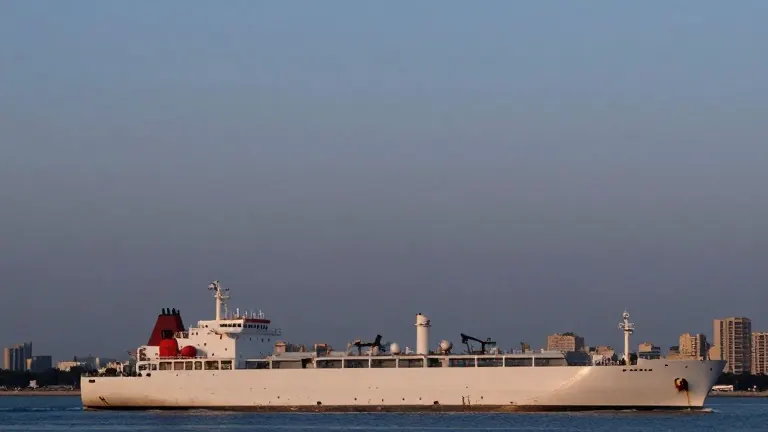
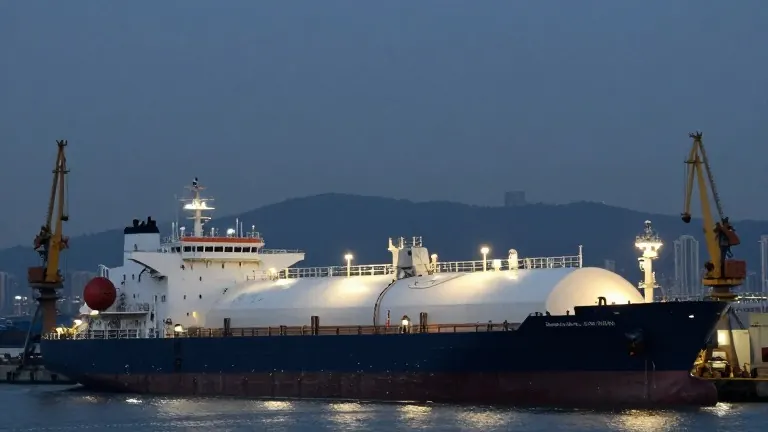
Qatar’s national gas transport company reported that one of its vessels was struck by unidentified objects in the Persian Gulf on Friday night. The incident occurred as high-level diplomatic efforts in Doha attempt to keep the United States and Iran from returning to full-scale war.
Abbas Araghchi, Iran’s top diplomat, said on Saturday that Iranian negotiators are currently in Qatar. They are reviewing a proposal that could reopen the Strait of Hormuz within two days if Washington meets specific conditions. Araghchi stated that Iran hopes the U.S. chooses diplomacy and acts with rationality, though he noted no direct talks are taking place between the two countries at this time.
The vessel, the Al Mayeda, sustained damage but remained operational. Qatar Gas Transport Co., known as Nakilat, confirmed that no crew members were injured and there was no environmental impact. The company did not identify who fired the objects. Iran has previously claimed responsibility for attacks on ships and warned against vessels passing through the Strait of Hormuz without its permission. Qatar’s foreign ministry condemned the strike and said authorities are investigating the incident.
In parallel developments, Israel and the United States continued coordinating on the region’s security challenges. President Donald Trump told reporters on Saturday that he had a very good talk with Israeli Prime Minister Benjamin Netanyahu regarding the war in Iran. Netanyahu did not issue a public statement about the call. Some Israeli political analysts have suggested Netanyahu may seek renewed military action to improve his standing after his coalition lost its parliamentary majority in last week’s elections.
Combat continues in other parts of the region despite recent truces. Israeli strikes on Gaza killed eight people on Sunday, including a four-year-old boy. Nasser Hospital in Khan Younis received five bodies from a strike in that city, while Shifa Hospital in Gaza City received three bodies and a seriously wounded woman from another strike. The Israeli military said it targeted militants in both locations. More than 1,570 Palestinians have died since the October 2025 ceasefire began, bringing the total death toll of the war to over 74,500 according to Gaza’s Health Ministry.
Tensions also rose in Yemen, where Iran-backed Houthi rebels reported two airstrikes on the University of Hodeida’s medical school. The rebels blamed Saudi Arabia for the strikes, while the Saudi-led coalition described them as a precision operation. Separately, Iran designated the British navy and air force as terrorist organizations and labeled the MI6 intelligence service a hostile entity. The Iranian Foreign Ministry accused the U.K. of supporting U.S. and Israeli attacks by providing military bases and logistical support.
The United Nations is also seeking clarity on the status of its personnel in Yemen. A U.N. human rights staffer, Mohammad el Shami, died in Houthi custody, marking the second U.N. employee to die in rebel detention. El Shami had been held since June 2024 without proof of life. A World Food Program worker died in similar circumstances in February 2025.
Source: Sentinel Colorado